
Built for fast service at busy sites
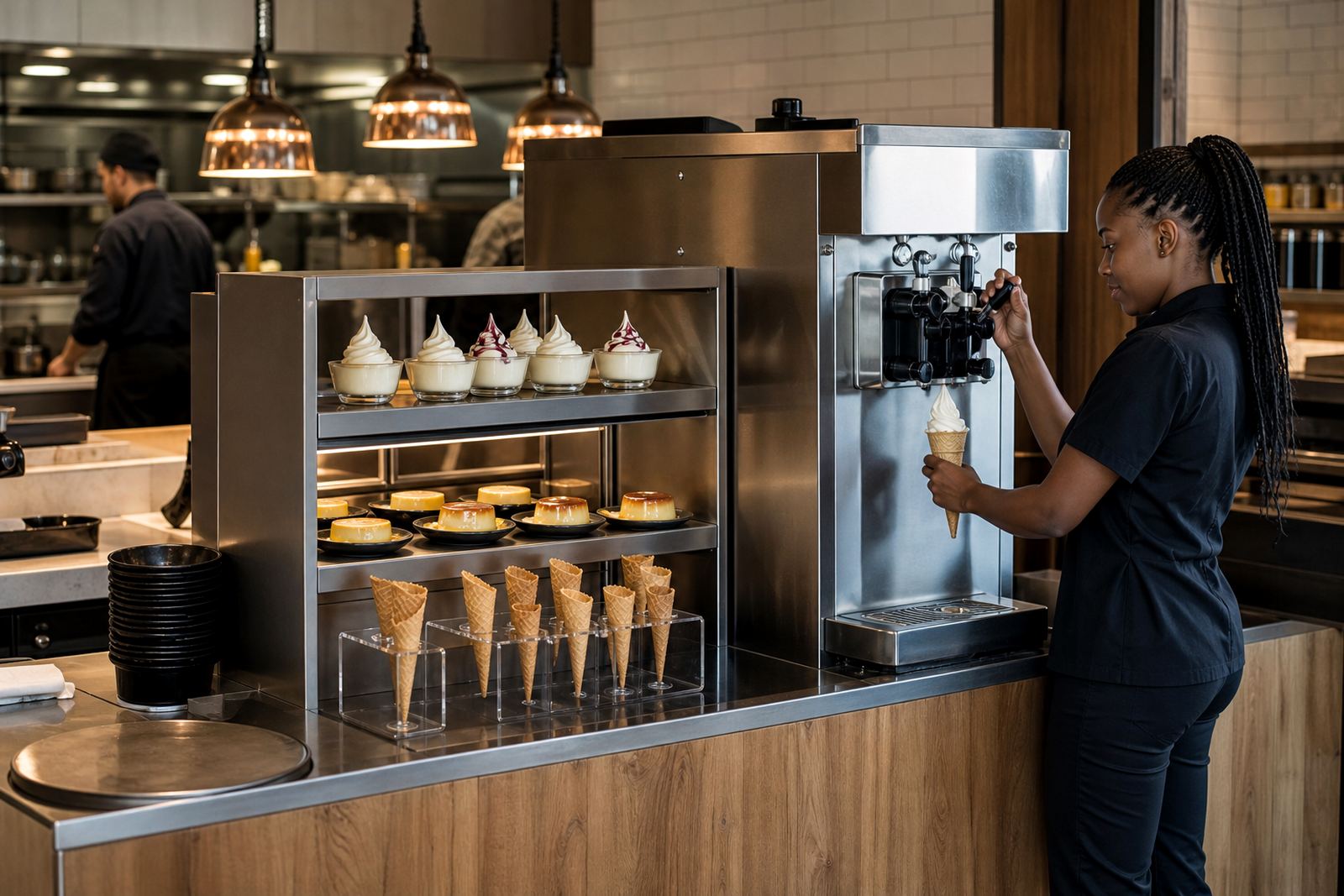
The Forecourt Service Unit is a practical frozen dessert machine for sites that want a straightforward setup and a dependable serving rhythm. It is suited to soft-serve and frozen yoghurt service where customers expect quick turnaround, clean presentation and a consistent result from the first cone to the last.
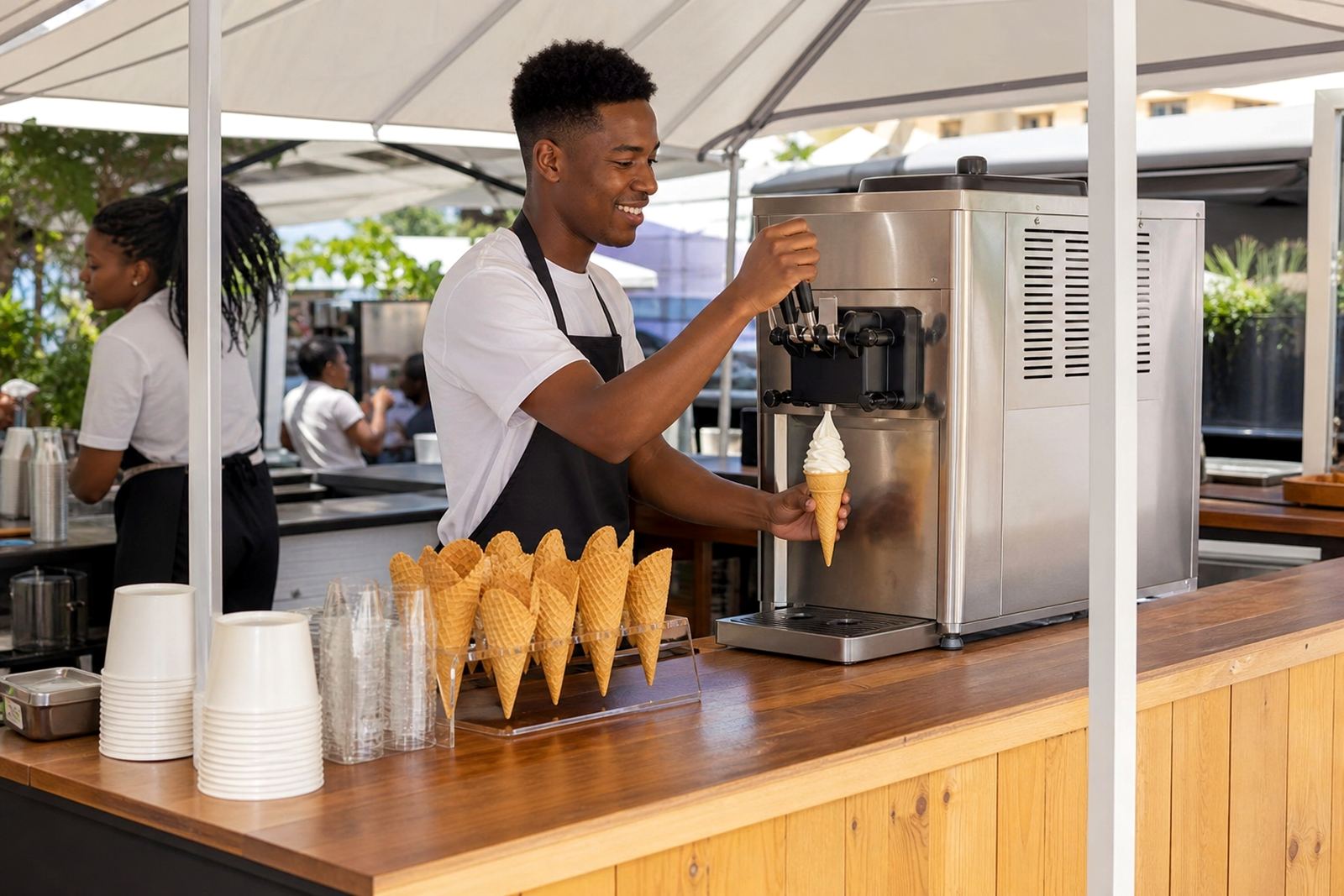
In Durban, Johannesburg, Pretoria, Cape Town and Gqeberha, this kind of unit works well in forecourts and roadside stop points where foot traffic changes through the day. It is also a sound fit for takeaway counters, small restaurants and kiosk-style outlets that do not have room for a large back-of-house setup.
The unit is designed for daily use, with controls that are easy for new staff to follow and a layout that supports fast wipe-downs between shifts. That helps on sites where the team may be handling drinks, snacks and dessert sales at the same time.
Sizes and options to match your counter
Different sites need different output levels, so the Forecourt Service Unit is available in practical sizes. You can match the machine to the number of servings you expect per day, the space available on the counter and whether you want a single flavour or a dual flavour setup.
- Single flavour models for compact counters and lower to moderate volume service
- Dual flavour models for sites that want two flavours plus a mix option
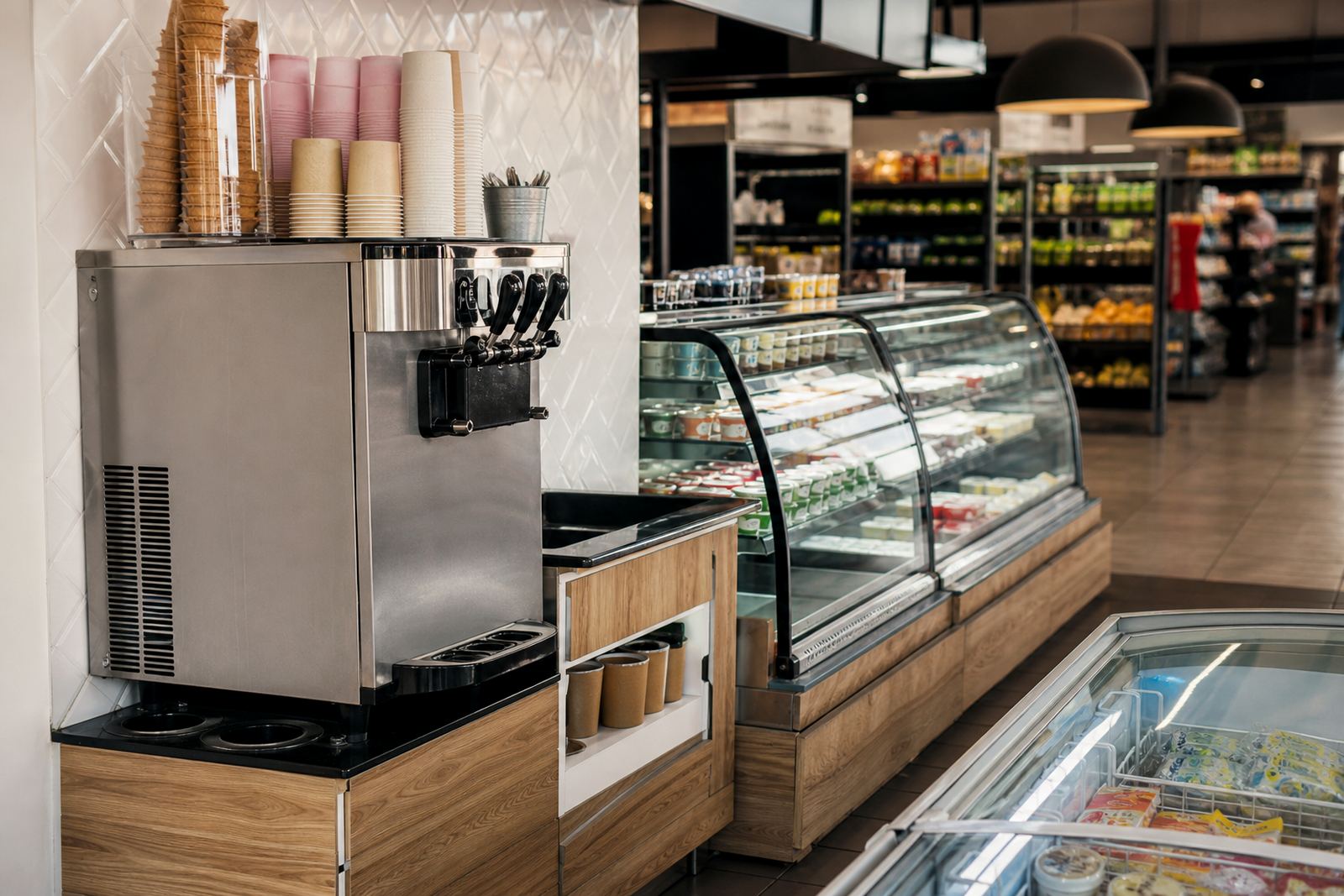
- Countertop and floor standing configurations depending on available space
- Air cooled or water cooled formats, selected according to the site conditions
- Optional hopper and cylinder setup for faster recovery during peak periods
If your outlet is in a mall, forecourt or high humidity coastal area, the cooling choice matters. Air cooled units are easier to place, while water cooled units can be a better fit in tighter kitchens or warmer service areas where airflow is limited.
Where the unit fits best in South Africa
This machine suits businesses that want frozen dessert sales without a complicated workflow. It is a good match for fuel stations, convenience stores, campus kiosks, beachfront takeaway spots, family restaurants and compact dessert bars. Sites in coastal towns like Durban and Gqeberha often need equipment that can keep up in warm, humid weather and still clean down quickly at close of trade.
It also suits businesses with changing staff rosters. The operating steps are simple enough for trained attendants to learn quickly, which reduces mistakes during busy periods. That is useful when the same team is handling payment, serving and cleaning in one shift.
- Forecourts with steady impulse purchases
- Kiosks and takeaway counters with limited prep space
- Cafes wanting a dessert add-on without a separate kitchen line
- Restaurants that need a simple self-serve or counter-serve option
For sites in Johannesburg and Pretoria, the main benefit is dependable output during high lunch traffic. In Cape Town and along the coast, easy cleaning and machine protection from dust, salt air and humidity are often just as important as capacity.
Power, cooling and site setup
Before ordering, it helps to check the available power at your site and where the unit will stand. Many forecourt and kiosk sites work from standard single phase power, while higher-output setups may need a stronger supply. If the site has load-shedding exposure, a proper power plan is important so the mix stays at the right temperature and the machine can restart safely after interruptions.
Allow enough space behind and beside the machine for ventilation, cleaning access and service work. Good airflow around the condenser helps performance, especially in warmer provinces and in enclosed counters. If the site has a generator or backup supply, confirm the load with the installer before commissioning.
- Check the power supply type and capacity before delivery
- Allow clearance for airflow, cleaning and lid opening
- Confirm whether drainage is available for washdown and rinsing
- Make sure the counter can carry the machine weight safely
- Plan for a dry, level position away from direct sun where possible
Gas is not usually part of the operating setup for this product, but the site should still meet local municipal and fire safety rules for the broader forecourt or kiosk area where the machine is installed.
How to keep output clean and consistent
Good results come from a regular routine. The machine should be cleaned, sanitised and checked as part of daily close-down, with scheduled deeper servicing to keep seals, product lines and freezing components in good working order. On busy sites, a short cleaning routine at the end of each shift prevents build-up and helps protect product quality.
We recommend preventive maintenance for sites that run long trading hours or experience heavy weekend trade. That includes seal checks, parts inspection, mix calibration and deep clean service where needed. In coastal areas, regular care is even more important because humidity can affect storage, surfaces and machine performance if the unit is left damp.
- Daily wipe-down and sanitising after trade
- Scheduled deep clean to protect flavour quality
- Seal and parts checks to prevent leaks and wear
- Mix calibration for consistent texture and overrun
- Season prep checks before holidays, school breaks and peak trading periods
We also support operators with phone support when a simple check is needed and with breakdown repairs if a fault needs hands-on attention. That gives busy sites a way to keep trading without a long interruption.
What to confirm before you place an order
When ordering a Forecourt Service Unit, it helps to confirm the site size, daily serving target and the flavours you plan to offer. If you want a machine for a small kiosk, the right choice may be different to a unit for a petrol station forecourt with weekend traffic and school holiday spikes.
You should also check the serving format, the expected mix usage and whether staff need training on start-up and cleaning. If the outlet is being moved or reworked, a site relocation plan can save time and prevent damage during changeover. Our team in Springfield Park, Durban works with clients across South Africa and supports delivery planning, installation and startup commissioning.
- Serving volume per day and peak trading times
- Available counter space and access for maintenance
- Power supply details and backup arrangements
- Preferred flavour setup and mix usage
- Whether operator training is needed for new staff
For cafes and kiosks, the best machine is the one that fits the counter, the team and the trade pattern. A clear spec upfront makes the install smoother and avoids costly changes later.
Key facts
| Machine type | Forecourt Service Unit for soft-serve and frozen yoghurt |
|---|---|
| Configuration | Single flavour or dual flavour options |
| Cooling | Air cooled or water cooled depending on site |
| Power | Single phase or site-specific supply by model |
| Use case | Forecourts, kiosks, cafes and compact dessert counters |
| Support | Installation, training, maintenance and breakdown repairs |