A compact dessert station for full menu service
The restaurant dessert unit is built for kitchens that want to serve frozen desserts after lunch and supper service, without setting up a separate prep area. It combines a freezing system, mix hopper and dispensing controls in one machine, so the team can produce a consistent portion with little training. For restaurants in Durban, Johannesburg, Pretoria, Cape Town and Gqeberha, that matters when foot traffic rises over weekends or during holiday periods.
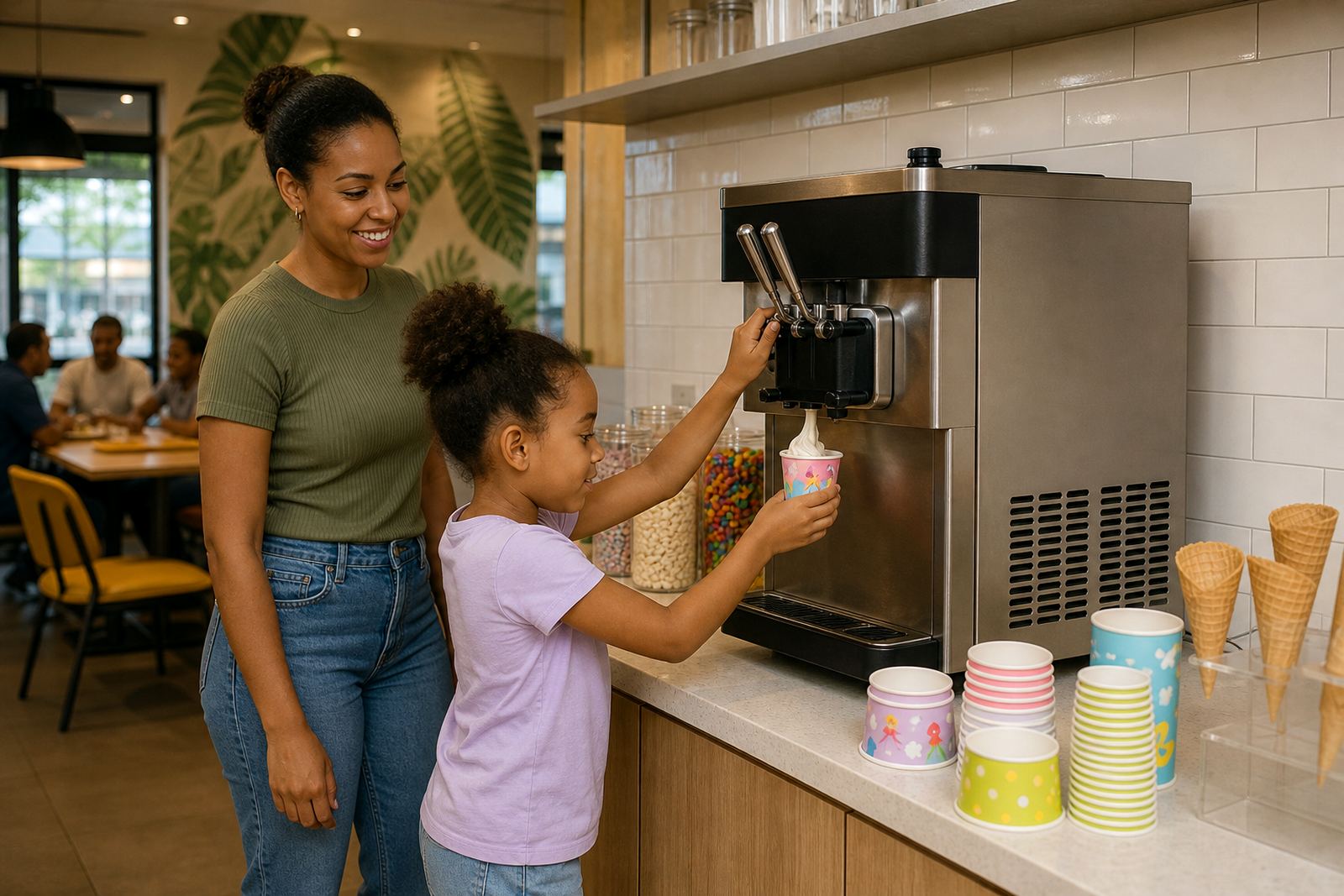
Most kitchens use it as a front-of-house dessert point or a back-of-house production unit feeding plated desserts. It suits restaurants that want to offer vanilla, chocolate, swirl or frozen yoghurt with cones, cups or plated toppings. The machine is also practical where staff numbers change often, because the controls are straightforward and the output stays consistent from one shift to the next.
- Suitable for restaurants, hotel dining rooms, café kitchens and food court sites
- Produces soft-serve or frozen yoghurt depending on the model and mix used
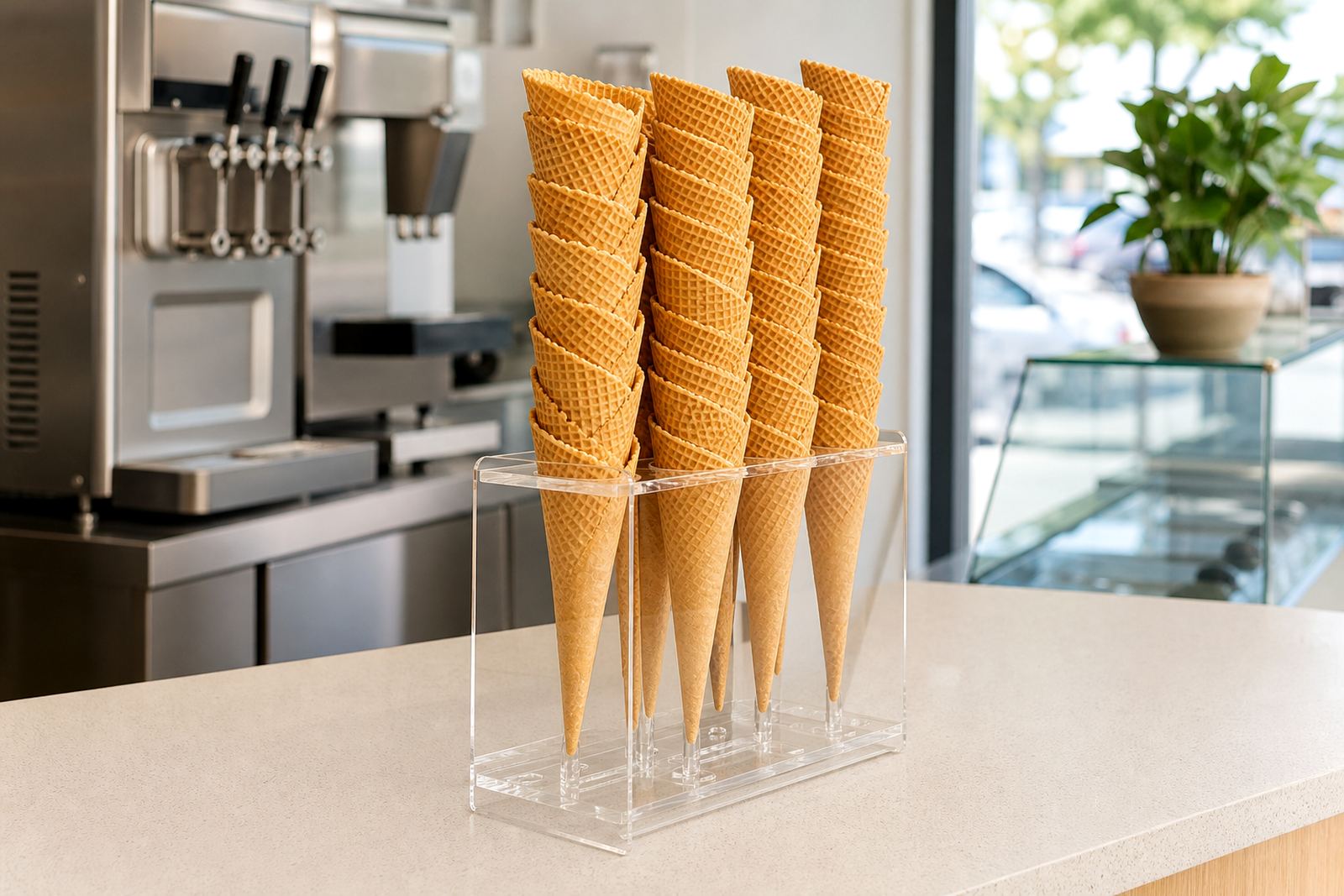
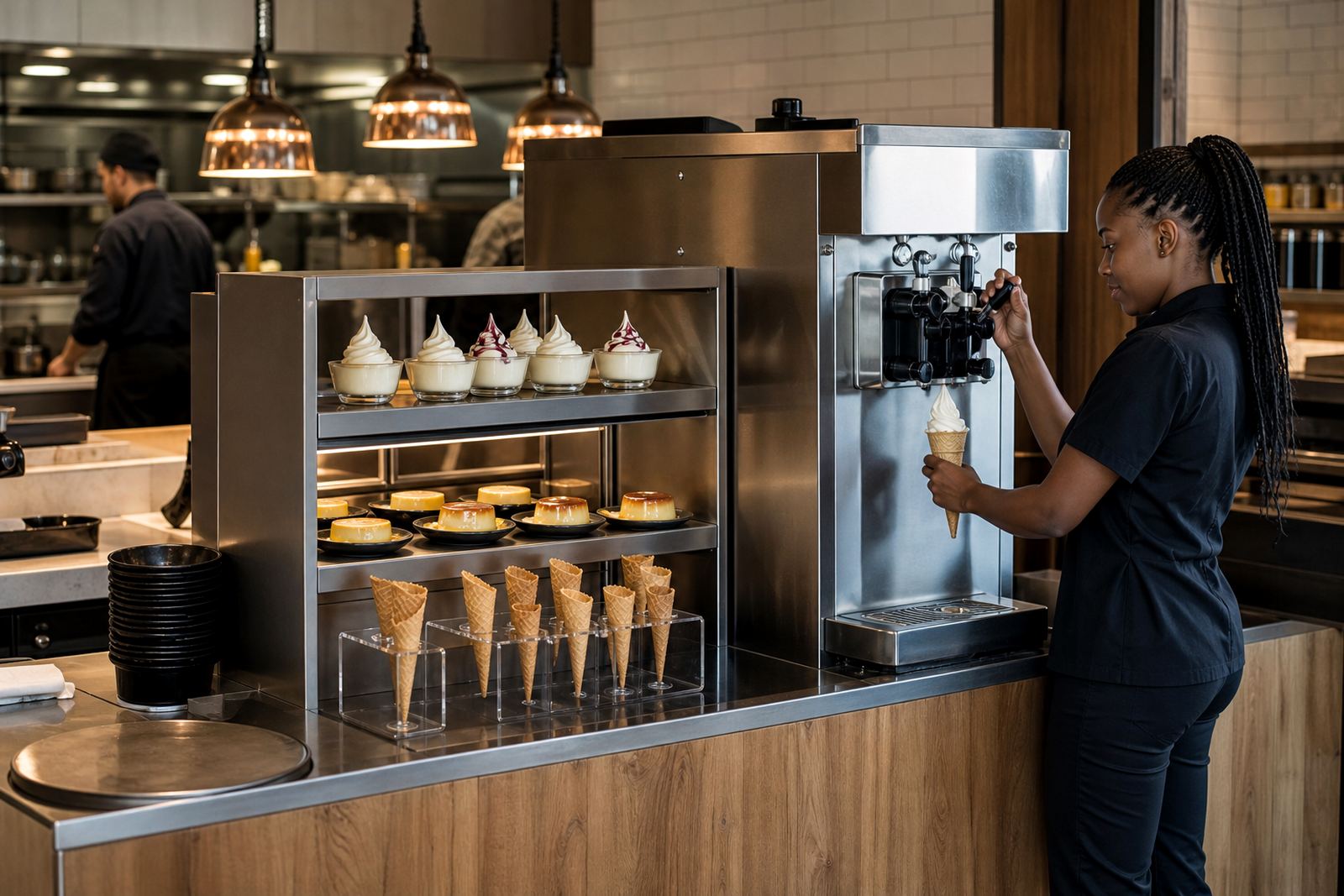
- Works for plated desserts, cones, takeaway cups and garnish service
- Can be paired with mix stock, cones and sanitising supplies from one supplier
Sizes and options that fit different service volumes
There is no single size that suits every restaurant. A small site in Springfield Park or Umhlanga may only need one flavour with a modest daily output, while a high-volume restaurant in Sandton or the Cape Town CBD may need a dual-flavour unit or a larger hopper capacity. The right choice depends on how many desserts you sell during a normal shift and how much counter space you have available.
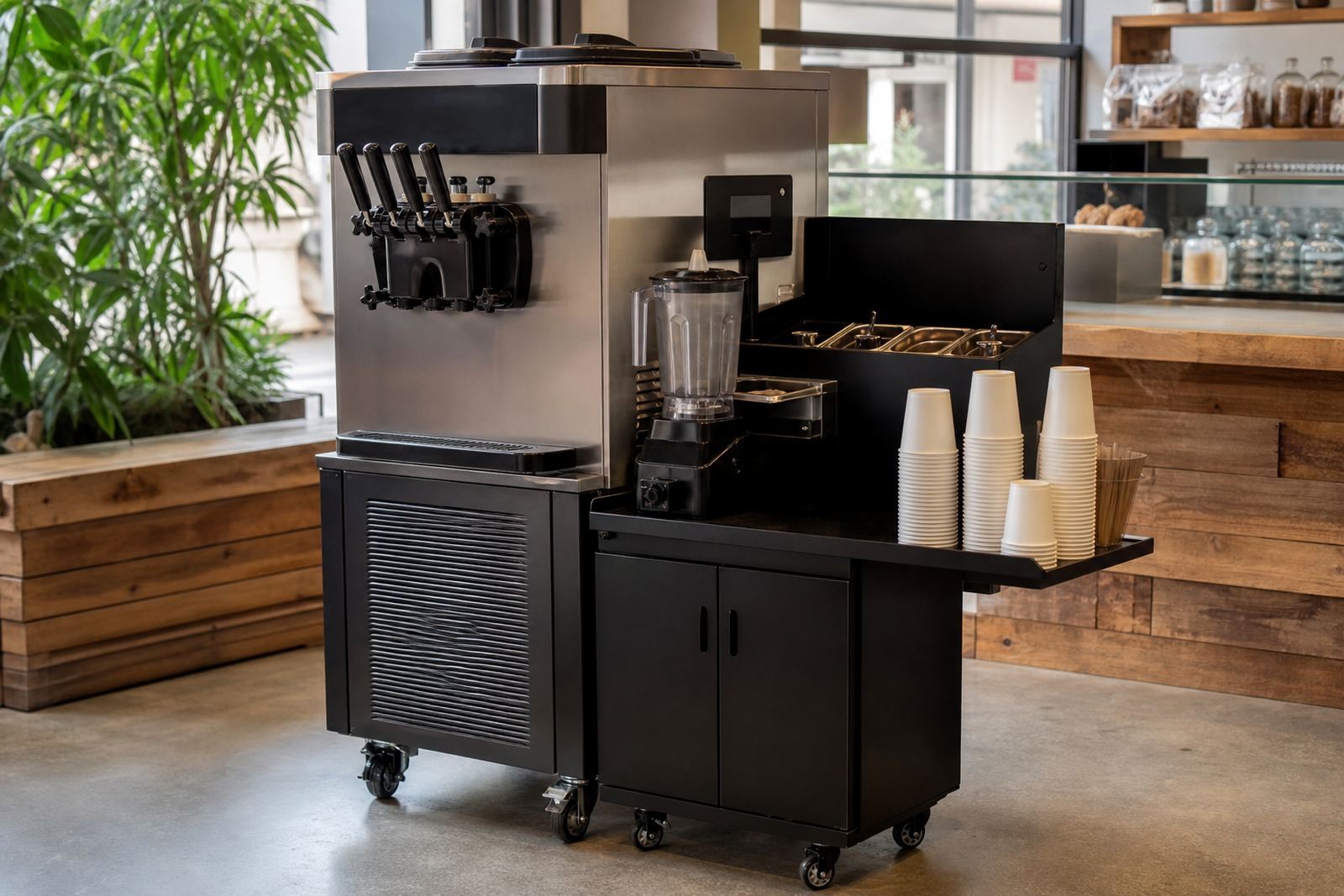
Typical options include compact countertop machines, larger floor-standing units and dual-cylinder models that allow two flavours plus a swirl option. Countertop units are easier to position in tighter kitchens, while floor-standing units tend to suit restaurants with more room and a dedicated dessert point. Some customers prefer a model with a larger hopper for supper service, especially where the team needs to hold mix ready during busy periods.
- Single-flavour units for smaller restaurants and test menus
- Dual-flavour units for mixed dessert menus and higher turnover
- Countertop and floor-standing formats available
- Mix hopper capacities commonly range from about 5 L to 15 L per side, depending on model
If the site has limited counter depth or narrow access during delivery, it helps to measure doorways, passage widths and the planned position before ordering. A few centimetres can make the difference between a neat fit and a difficult install.
Where the machine works best in South African restaurants
This unit suits restaurants that want a consistent dessert add-on without expanding the pastry kitchen. It works well in family restaurants, beachfront venues, hotel dining rooms, casual steakhouse settings and upscale cafés that serve breakfast through dinner. In coastal towns like Durban and Gqeberha, the menu advantage is simple: cold desserts sell well in warm weather and the machine gives you a fast answer when customers ask for something sweet after a meal.
It also works in locations where load-shedding is part of daily planning. If the restaurant already uses backup power or a generator for fridges and hotholding, the dessert unit can be planned into that setup as well. The key is to check the running load before service starts, and to allow for the startup surge. Sites in older buildings should also check ventilation and warm-air extraction, because frozen dessert machines need enough airflow around the condenser.
Municipal rules and hygiene checks matter too. Restaurants must keep the serving area clean, use approved sanitising procedures and make sure staff can clean the machine properly after service. If the unit is installed in a mall or shared food court, the landlord may also have requirements for drainage, power points and service access.
Installation, power and site requirements
Installation is usually straightforward when the site is prepared properly. The machine needs a level surface, a nearby electrical supply and enough space at the back and sides for ventilation. We recommend planning the position before the final kitchen fit-out, especially if the unit will be placed near a hot line or next to a fryer, since excess heat can affect performance and increase cleaning needs.
Power requirements vary by model, but most restaurant dessert units run on standard single-phase electricity, while larger output models may need three-phase supply. Your electrician should confirm the point of connection, breaker size and cable rating before delivery. In Durban and other humid coastal areas, it also helps to keep the machine away from open doors where salty air and moisture can build up on exposed parts.
- Level floor or counter position with access for cleaning
- Dedicated power supply with correct breaker protection
- Clear space for airflow at the rear and sides
- Access to a sink or wash area for daily sanitising
For restaurants that relocate or expand, site relocation support can be arranged so the machine is moved, reconnected and tested again before the next service run.
Care, cleaning and preventive servicing
Frozen dessert machines need regular care if you want stable texture and fewer breakdowns. Daily cleaning removes product build-up, keeps the dispense path open and helps control hygiene. Weekly or scheduled deep cleaning is useful where the machine runs for long hours, because sugar and dairy residues can gather in seals and nozzles if they are left too long.
Preventive maintenance is worth planning ahead of peak season, school holidays and winter trading spikes. That includes checking seals, worn parts, refrigeration performance, motor operation and mix calibration. If the unit is used in a restaurant with a mixed menu, the operator should also be trained to spot early signs of poor draw consistency, unusual noise or slower freezing. Small issues are easier to fix before they stop service.
- Daily rinse and sanitising after service
- Deep clean service on a scheduled basis
- Seal and parts replacement when wear shows
- Season prep checks before holiday trading
Good care also protects product quality. If the mix is too thick or too warm, the machine can strain. If it is too thin, you may get soft product that does not hold its shape. Proper mix calibration keeps the texture right and helps staff serve with less waste.
What to confirm before you place an order
Before ordering, it helps to confirm a few practical details so the machine matches the restaurant’s daily service. First check expected dessert volume, because a small menu with 20 or 30 servings a day needs a different machine from a site that sells dessert after every lunch and supper shift. Second, confirm whether the restaurant wants one flavour, two flavours or a swirl option. Third, measure where the unit will sit and make sure there is a service route for delivery and maintenance.
You should also confirm the mix type, cone supply and cleaning routine. Some restaurants want frozen yoghurt for a lighter dessert option, while others prefer a richer soft-serve finish for plated desserts. If you are opening a new branch in Pretoria, Cape Town or Pietermaritzburg, it helps to align the order with the launch date so installation and startup commissioning can happen before trading begins.
- Expected daily and peak dessert servings
- Single, dual or swirl flavour setup
- Available floor space and door access
- Power supply and backup power arrangements
- Mix preference, cone supply and cleaning plan
Restaurants that want a clean handover can also arrange operator training, phone support and follow-up servicing after the first few weeks of trading. That gives the kitchen team confidence and keeps the dessert station running properly from day one.
Key facts
| Machine type | Restaurant dessert unit for soft-serve or frozen yoghurt |
|---|---|
| Flavour options | Single, dual or swirl models depending on site needs |
| Typical hopper capacity | About 5 L to 15 L per side, model dependent |
| Power supply | Single-phase on smaller units, three-phase on larger output models |
| Best suited for | Restaurants, hotel dining rooms, cafés, kiosks and food court sites |
| Support available | Installation, startup commissioning, training, maintenance and repairs |