
What the cup dispenser kit does on a busy counter
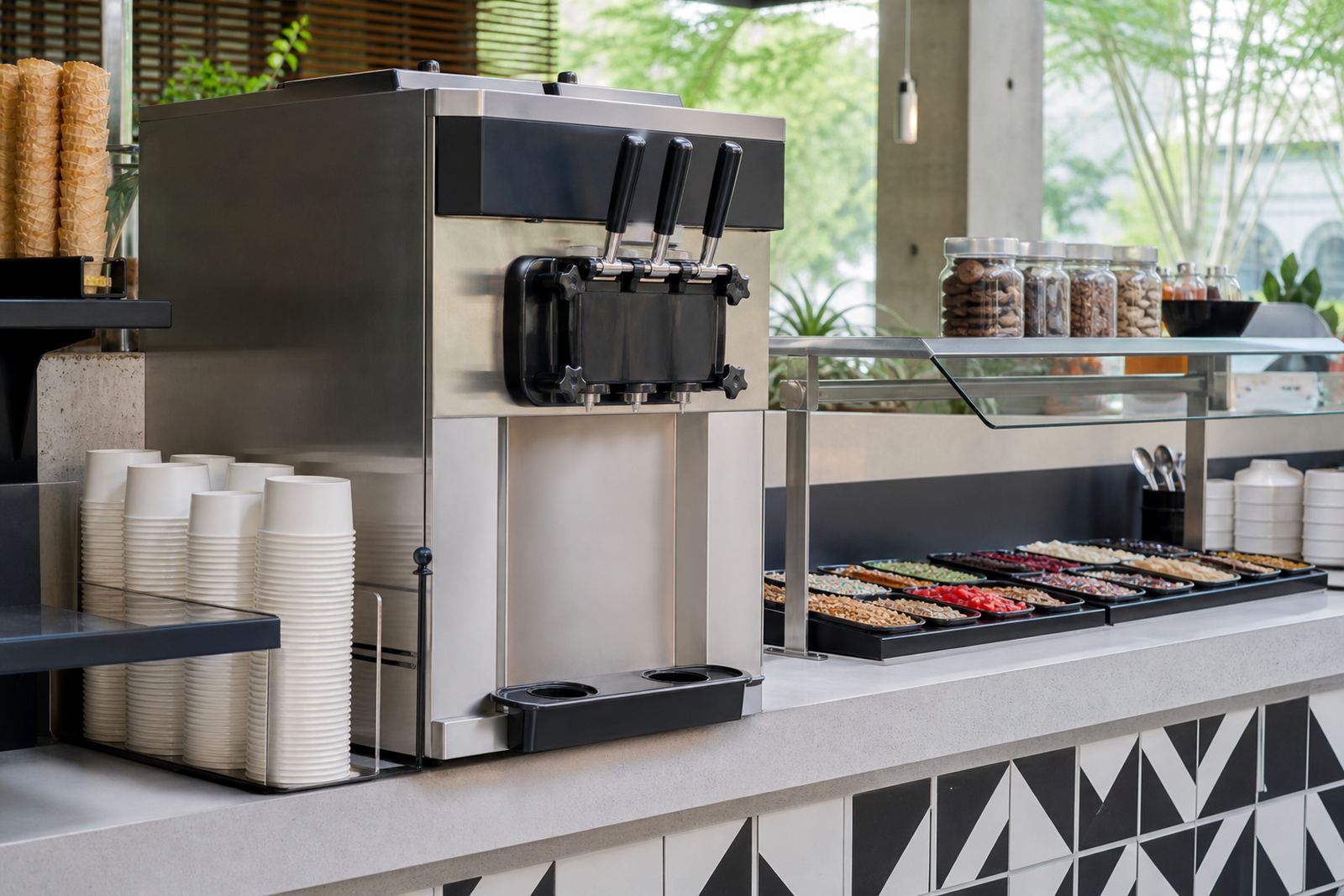
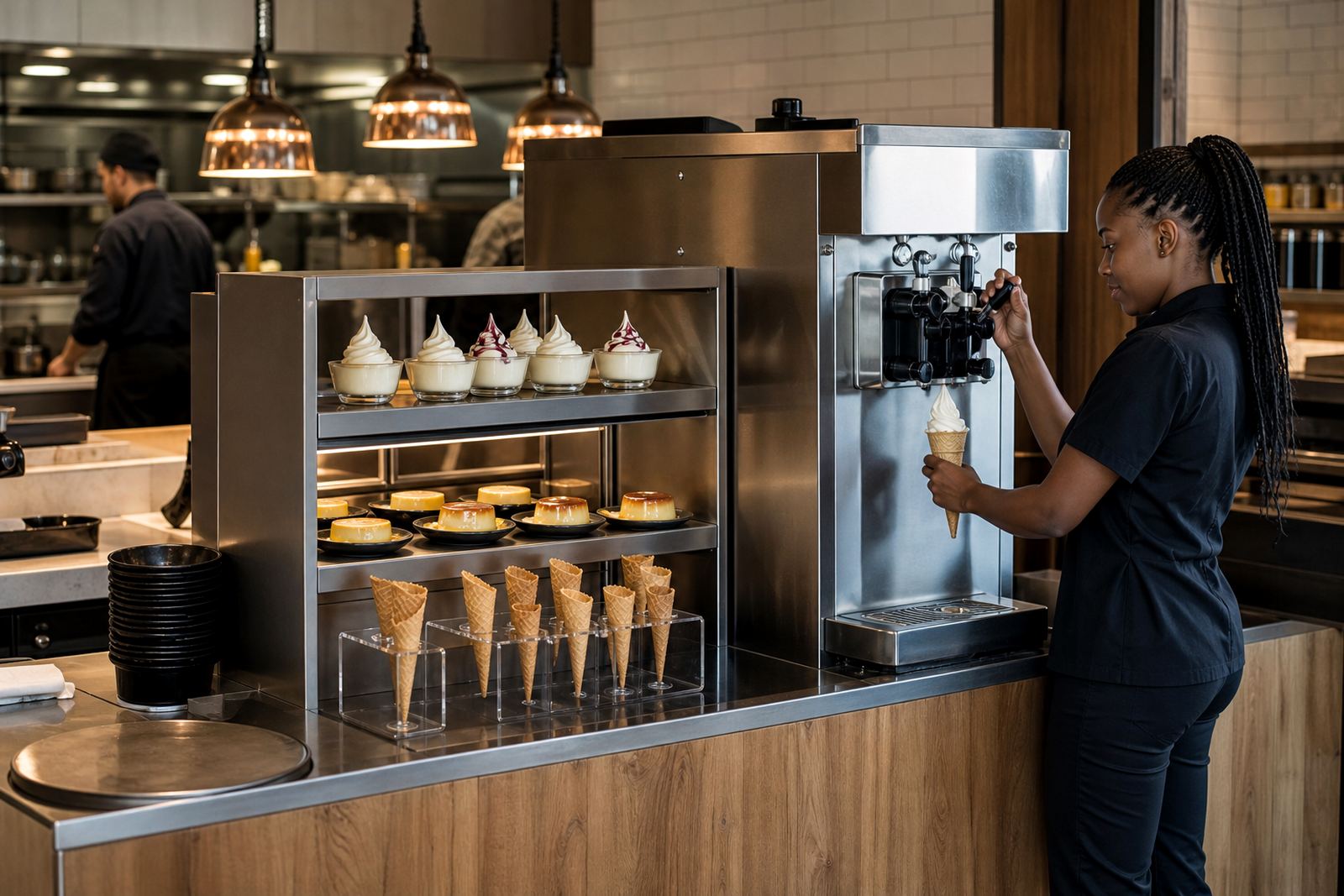
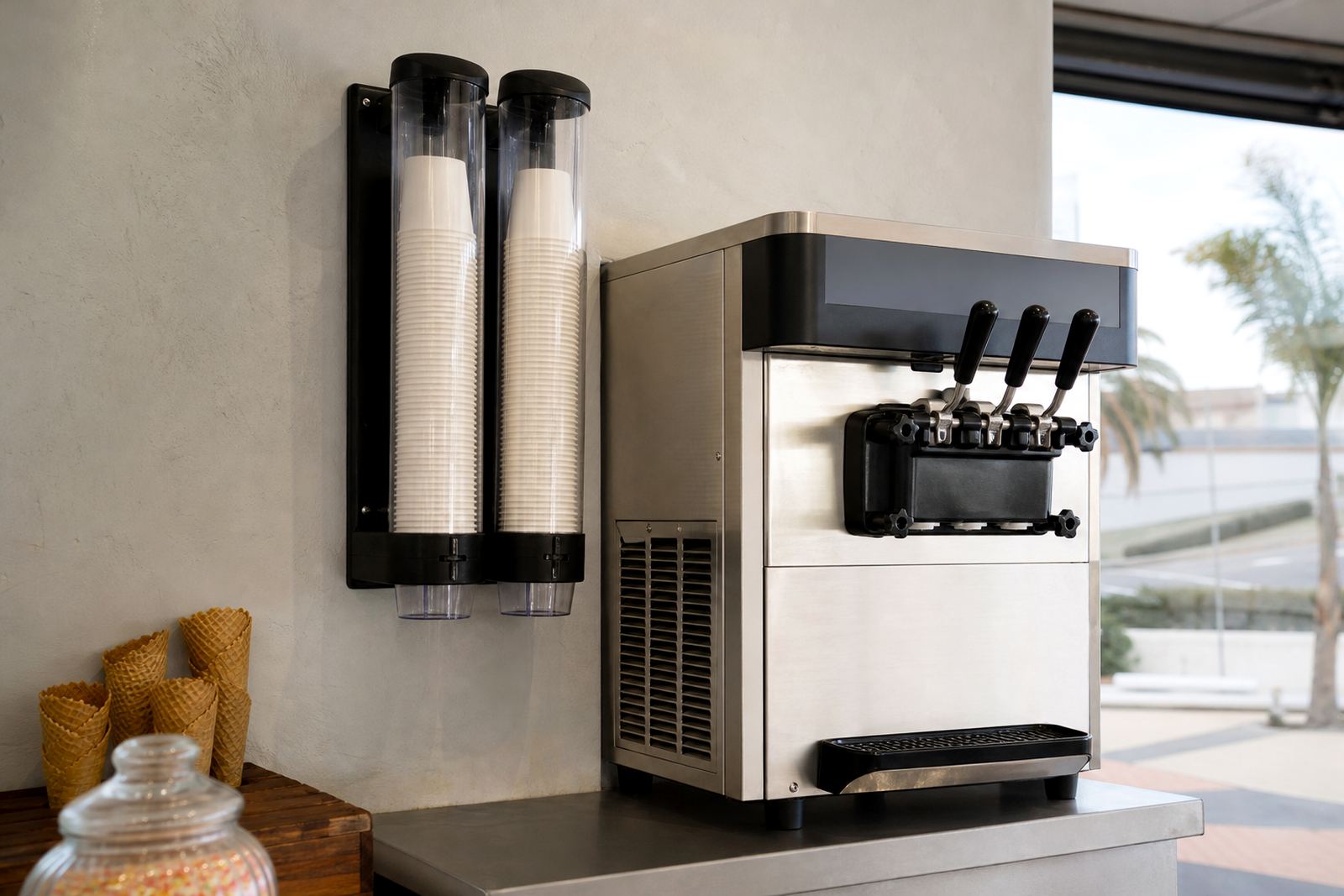
The cup dispenser kit is a practical storage and dispensing setup for disposable cups used with soft-serve, frozen yoghurt and takeaway dessert service. It keeps stacks protected, upright and ready to pull one at a time, which helps reduce handling, spills and wasted time during peak trading. In a small kiosk or a larger restaurant, the main benefit is simple: staff can serve faster without searching through boxes or stacking cups by hand.
It is especially useful where counter space is limited and hygiene matters. Cups stay covered from dust and splashback, and the dispenser helps keep the front of house neater. For coastal sites in Durban or Gqeberha, that extra protection also helps in humid conditions where packaging can soften if left open for too long. The kit is straightforward to use and doesn’t need special training, so new staff can pick it up quickly.
Cup sizes, formats and practical options
Different serving styles need different cup sizes, so the kit can be matched to your menu and portion control. Most outlets choose a single size for consistency, while others fit two dispensers side by side for mixed service such as kiddies cups and standard portions. If you serve both dine-in and takeaway, it can also help to separate cup types so staff don’t grab the wrong size during a rush.
- Small portion cups for tastings, mini servings and add-on specials
- Medium cups for standard soft-serve or frozen yoghurt portions
- Larger cups for layered desserts, toppings and takeaways
- Single stack or dual stack setups depending on counter space
- Front counter or back prep placement, depending on service flow
Where outlets are trading near schools, malls or beach fronts, cup choice often comes down to speed and portion control. The right kit keeps cups organised so the service point stays tidy and the team can work faster, even when the line goes out the door.
Where this kit suits best in South African trading spaces
This kit suits cafes, kiosks, dessert counters, milkshake bars and restaurants that serve frozen treats on a regular basis. It is a good fit for independent traders in Springfield Park, Umhlanga and Pietermaritzburg, as well as high-footfall areas in Johannesburg, Pretoria, Cape Town and Gqeberha. If your business relies on quick turnover and clean presentation, a dispenser can make day to day service easier.
It also works well in sites with limited back-of-house storage. Rather than keeping cup cartons open on shelves or under the counter, the dispenser lets you load a stack and keep the rest in reserve. That matters in outlets with narrow prep areas or changing shift teams, because it reduces mix-ups and keeps the counter more organised. During load-shedding periods, when service teams may be operating with backup systems and tighter routines, a simple mechanical storage solution is one less thing to worry about.
- Kiosks with a compact service counter
- Cafes adding frozen yoghurt or soft-serve to the menu
- Restaurants needing quick dessert handover
- Beachfront or seasonal outlets that trade hard in summer
- Sites where staff rotation is frequent and clear setup helps
Installation, mounting and space planning
The cup dispenser kit is typically mounted to a counter, wall or service structure, depending on the layout and access needed. Before fitting, check that the surface is firm, level and able to support the dispenser when fully loaded. On stainless or tiled counters, the fixing points should be planned carefully to avoid movement during service. If the unit is positioned near a machine discharge area or toppings station, allow enough clearance so cups can be removed without crowding the workspace.
No power or gas connection is usually required for the cup dispenser kit itself. That makes it easy to place in busy service areas where every socket is already spoken for. It can sit alongside your frozen yoghurt machine, soft-serve machine or prep counter without adding electrical load. For best use, keep the dispenser within arm’s reach of the operator but away from splash zones, heat sources and direct sun through shopfront glass. If the outlet is on a coastal site, it is worth checking that the mounting stays firm and corrosion resistant over time.
Care, cleaning and regular servicing
Good care keeps the dispenser working cleanly and keeps the service area presentable. It should be wiped daily with a food-safe cleaner, especially around the opening where hands touch the unit most often. During deep clean routines, remove any loose dust, product residue or carton fibres that may build up around the stack. The aim is to keep the cup path clear so cups release smoothly and do not catch.
As part of preventive maintenance, check the fixing points, guide alignment and the general condition of the dispenser body. If a cup size changes, the stack should be rechecked so it remains free-moving and not too tight. In busier outlets, a quick weekly inspection is enough to catch wear early. That small habit saves time later and helps avoid messy service interruptions, especially when trade gets busy over weekends or school holidays.
- Wipe daily with a non-abrasive cleaner
- Check the stack path for dust and loose packaging fibres
- Inspect mountings during scheduled maintenance visits
- Keep spare cups sealed until needed
- Recheck fit if you switch to a different cup size
What to confirm before you order
Before placing an order, confirm the cup diameter, cup height and the number of stacks your counter needs. A dispenser that suits one cup size may not suit another, so the measurements matter. Also check whether you want a wall mounted or counter mounted setup, because the available space and service flow will decide the best fit. If your outlet serves takeaway and dine-in separately, it may be worth ordering a second unit so staff can move quickly without crossing paths.
It is also important to confirm how the kit will be used in your trading environment. A kiosk in a mall may need a neat front-facing layout, while a restaurant may prefer rear prep access. If the site has limited staff or is running through seasonal peaks, a simple configuration is often best. You should also check whether the cups are part of your regular supply pack, and whether you want extra sanitising supplies for the surrounding area. The right setup reduces wasted movement and keeps service flow predictable, which is exactly what a busy counter needs.
If you are ordering for multiple branches or a new site in Durban, Johannesburg, Pretoria, Cape Town or Gqeberha, it helps to standardise the same cup size across the group. That keeps replenishment easier and makes training cleaner. It also means replacement stock can be shifted between branches without fuss, should one site have a bigger weekend than expected. Slight changes in cup size can cause a surprising amount of slow-down, so it pays to check the details before the unit is fitted.
Key facts
| Product type | Cup storage and dispensing kit for service counters |
|---|---|
| Use case | Soft-serve, frozen yoghurt, dessert and takeaway cup service |
| Mounting options | Counter mounted or wall mounted depending on layout |
| Power or gas | No power or gas connection required |
| Suitable cup sizes | Sized to match selected cup diameter and height |
| Primary material | Food-service grade body with easy-wipe finish |