
What Theme Parks Need From A Dessert Counter
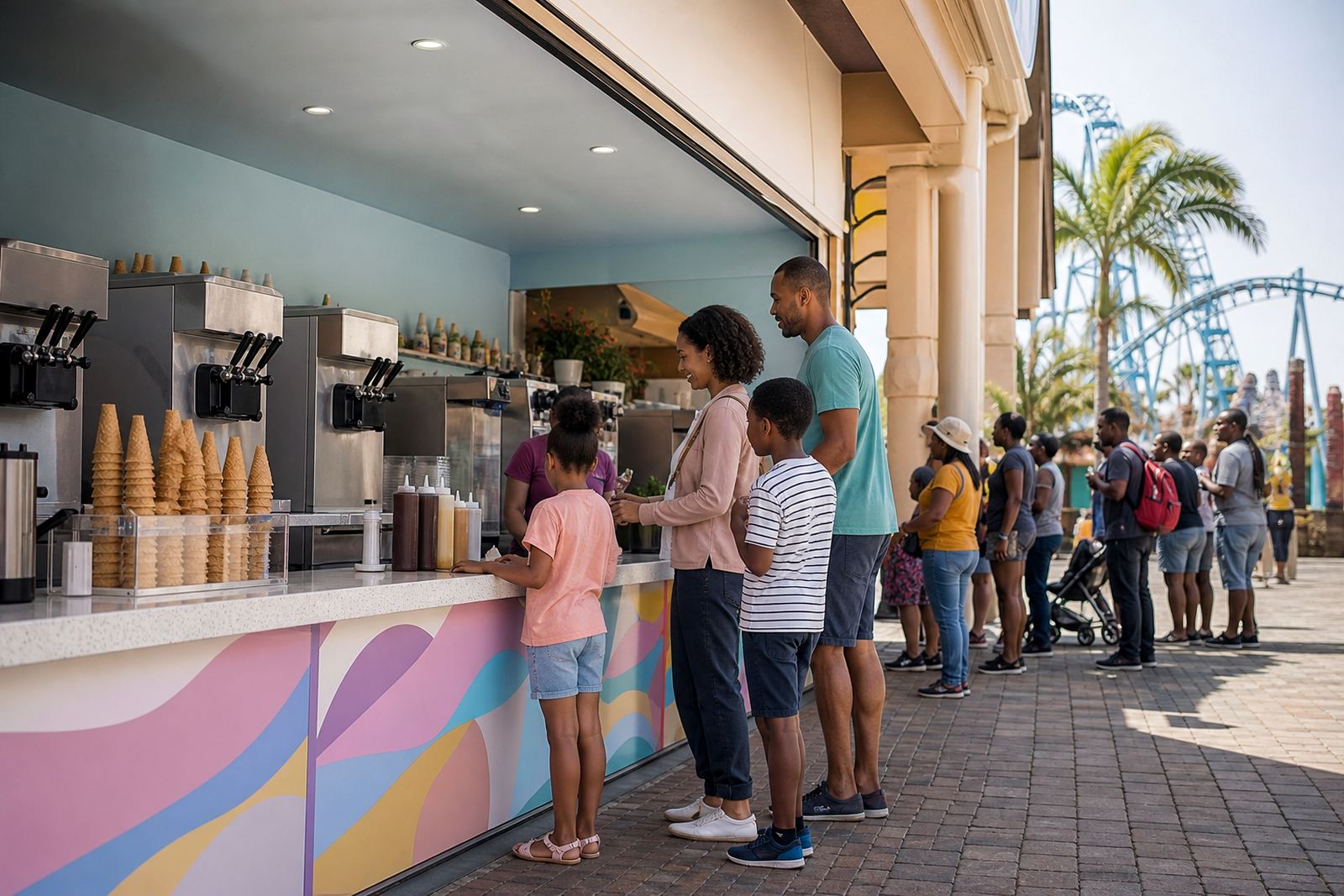
In a theme park, dessert is often a fast moving add-on rather than a sit-down order. Guests want something cold, quick and easy to carry while they move between rides, shows and play areas. That means your machine must recover fast, stay consistent through busy periods and cope with long trading hours in hot weather.
For Durban, Johannesburg, Pretoria, Cape Town and Gqeberha, the operating conditions can differ a lot. Coastal humidity, dusty inland air, power interruptions and seasonal crowd surges all affect how your frozen dessert setup should be specified. A park kiosk also has to work around municipal trading rules, waste handling, handwash access and food safety checks. If the counter is not planned properly, queues build up and stock gets wasted.
Most operators need more than a machine on a counter. They need a practical layout, safe electrical planning, clear workflow for staff and enough backup stock for peak days. That is where a good site plan makes the difference between a smooth service point and a slow one.
Typical Equipment Set For Busy Leisure Venues
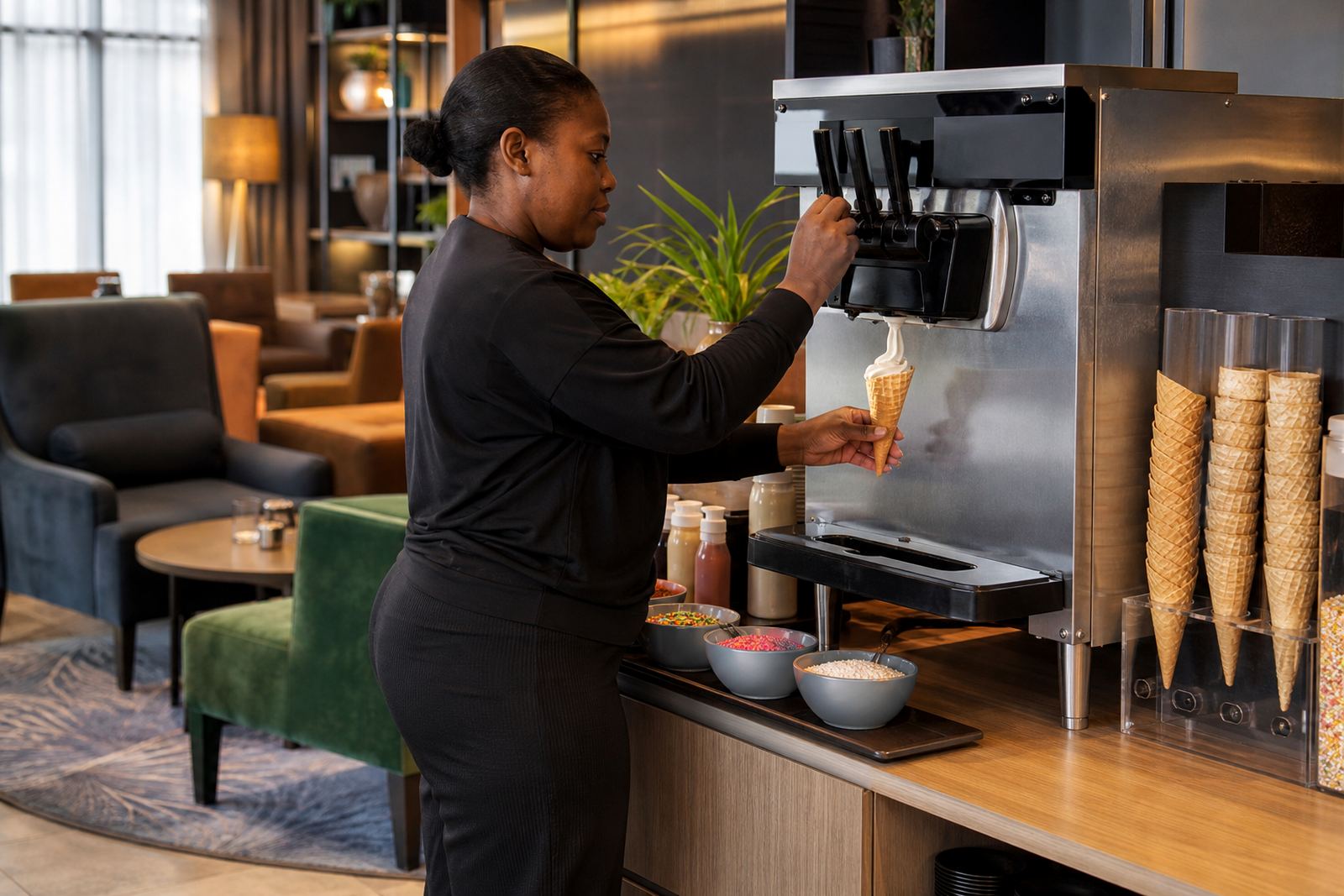
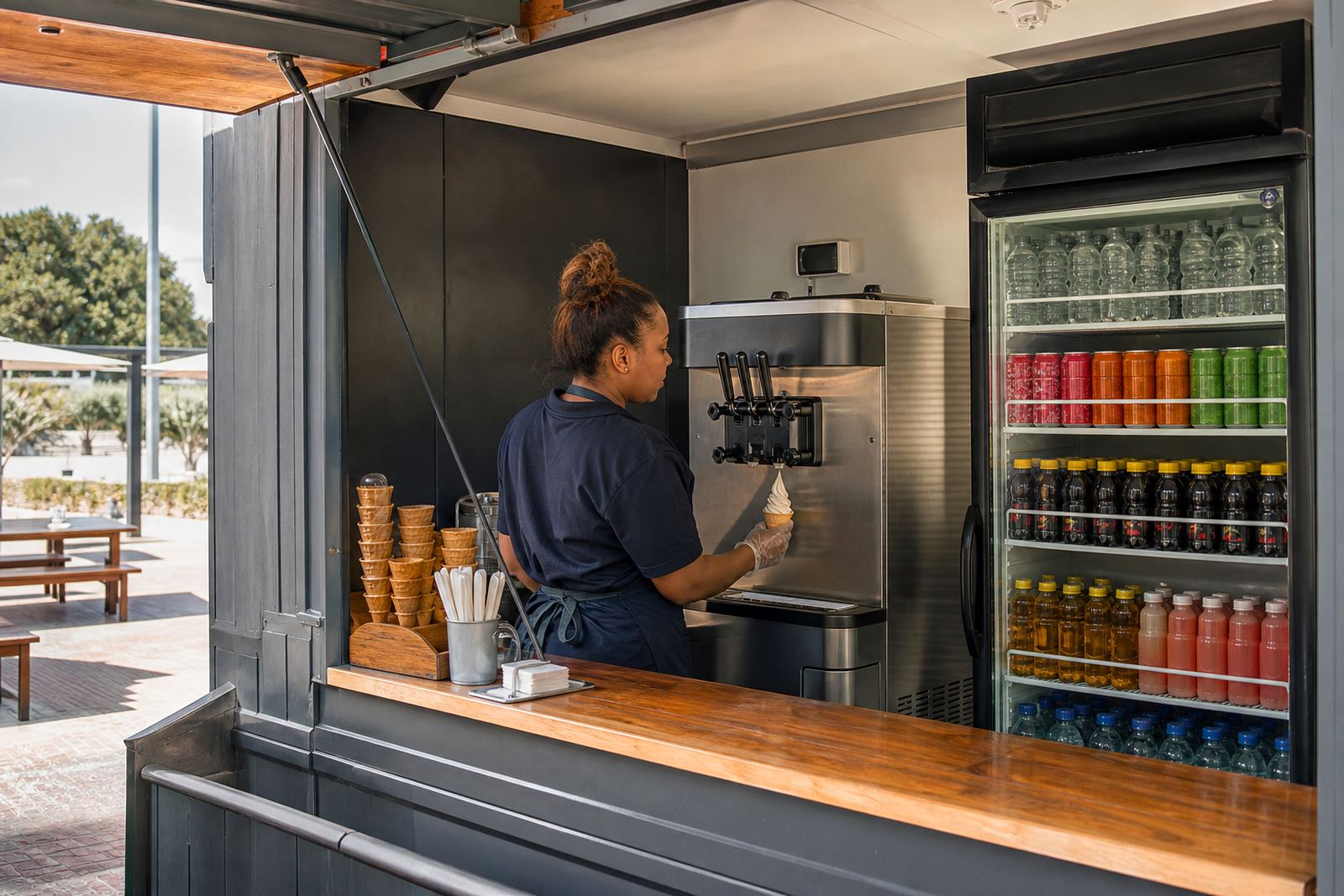
A theme park dessert point usually works best with equipment that is simple to train, easy to clean and able to handle repeated service through the day. The exact setup depends on foot traffic, product mix and available space, but most sites start with a core set that covers dispensing, storage and hygiene.
- Single or twin soft-serve machine for high volume service
- Frozen yoghurt machine where lighter dessert options suit the menu
- Mix storage tubs or fridges positioned close to the machine
- Cone and cup storage that stays dry and covered
- Handwash basin or approved handwashing point
- Sanitising supplies and cleaning kit for daily use
- Backup serving utensils and spare seals for maintenance readiness
Some parks choose one machine at the start and add a second unit once trade is proven. Others install two machines from day one, especially if weekends and school holidays already show heavy demand. We often see better results when the menu is kept focused, because fewer flavours and fewer moving parts make service faster and errors less likely.
Planning The Layout Around Queues And Heat
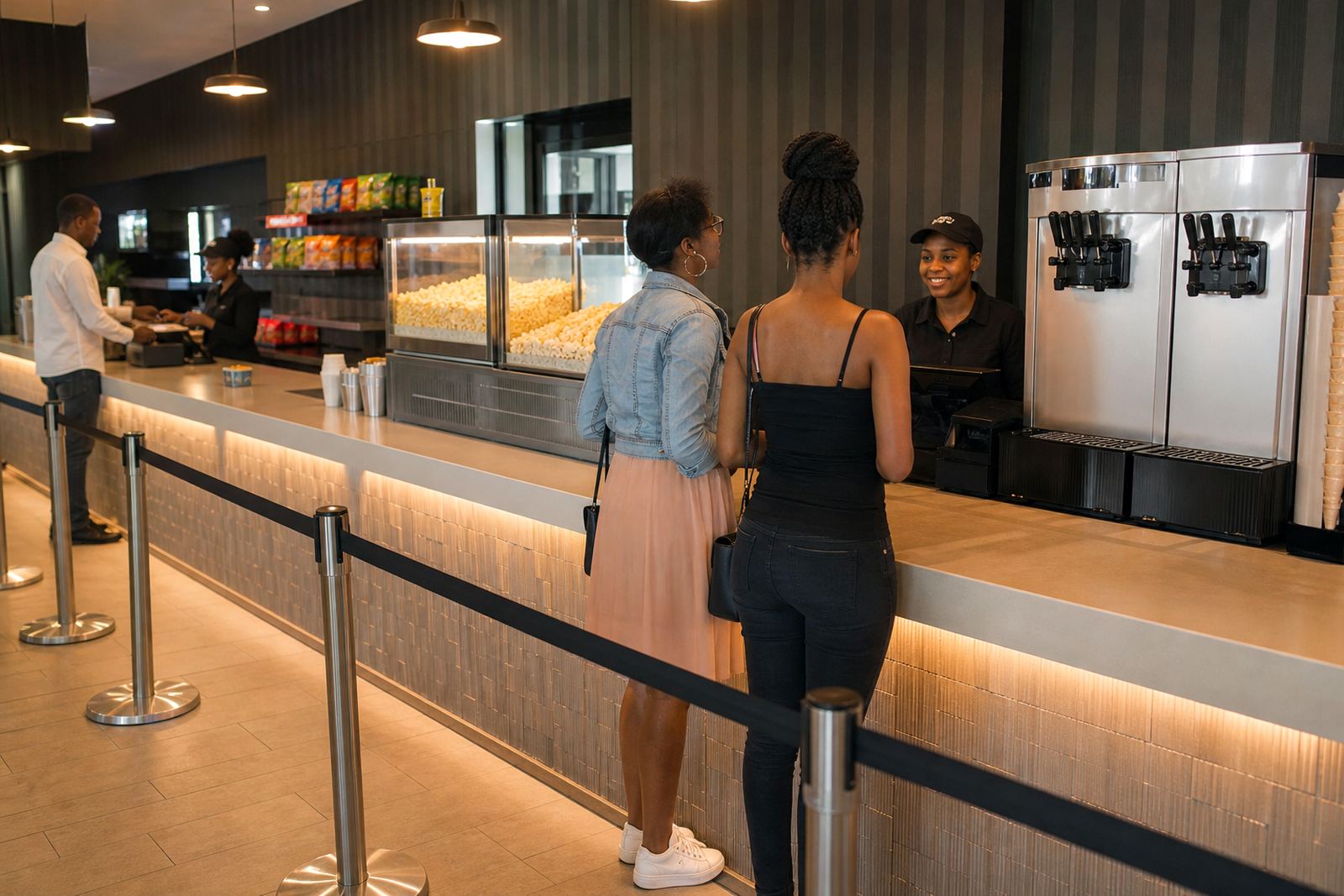
The biggest planning mistake in leisure venues is treating the dessert counter like a normal café island. In a park, the queue can wrap around corners, children may lean over the service zone, and staff need enough room to move without bumping trays or customers. Counters should be arranged so that order taking, dispensing, topping, payment and handover happen in a straight and clear flow.
Place the machine away from direct sun where possible, especially in outdoor or semi covered areas. Heat load can affect product consistency and make the operator work harder to keep texture right. If the site is near the coast, choose a position with less salt exposure and plan regular wipe downs because humidity can shorten the life of exposed fittings if they are not maintained.
Electrical points should be checked before delivery, not after. Many sites need dedicated circuits and proper surge protection because load shedding and voltage swings can interrupt trading. A generator or inverter back up may also be part of the plan, depending on the site and how important the dessert point is to daily revenue.
Seasonal Trading And Peak Day Readiness
Theme parks do not trade evenly across the year. School holidays, public holidays and hot weekends can push a calm counter into a very busy one within an hour. That is why season prep checks matter. They help confirm seals, temperatures, cleaning stock, mix levels and operator readiness before the rush starts.
Common seasonal issues include stock running low too early, operators overfilling hoppers, and mixers being set too soft for hot weather. Another mistake is not allowing enough time for pre cooling before opening. If the machine starts the day behind, the queue catches up quickly and service becomes uneven.
- Do a full test run before school holiday periods
- Check seals and parts before the first hot weekend
- Confirm that mixes are calibrated to the product and machine type
- Keep sanitising supplies and spare cones in a locked back store
- Train more than one operator so breaks and shift changes do not stall service
Our team supports startup commissioning, operator training and breakdown repairs for sites that cannot afford long downtime. For parks in Durban, Pietermaritzburg and further afield, fast response and good spares planning can save a full day of trade.
Budget Ranges For Theme Park Installations
Budget depends on machine size, number of flavours, site prep, accessories and how much support is needed before opening. A single entry level setup for a small kiosk may start from around R75,000 to R120,000. A more serious counter with two machines, proper prep space and installation support can range from R140,000 to R280,000 or more.
Where the site is part of a larger leisure precinct, additional costs may include electrical upgrades, back up power planning, site relocation work, stainless steel counters, or chilled storage. Preventive maintenance is worth budgeting for as well, because it is usually cheaper than a weekend breakdown and a queue of disappointed guests. Service costs vary by location and machine condition, but many operators set aside a monthly maintenance allowance so repairs do not hit cash flow all at once.
Mixes and cones are best treated as running stock, not once off purchases. In busy months, they move quickly and should be reordered ahead of peak periods. A site with strong traffic will often spend more on consumables than on repairs, which is a good sign that the counter is pulling its weight.
Support Across South Africa When The Crowd Is Waiting
SnoCream works with cafes, kiosks and restaurants, but theme parks bring their own pace and pressure. Our base in Springfield Park, Durban supports clients in Durban, Umhlanga, Johannesburg, Pretoria, Cape Town, Gqeberha and Pietermaritzburg. That means machine installation, startup commissioning, preventive maintenance, deep clean service, seal and parts, mix calibration, site relocations and phone support can all be planned around your trading calendar.
When a park is running through a busy season, the practical aim is simple: keep the dessert point open, keep the product steady and keep the queue moving. Good training and regular checks matter just as much as the machine itself. Even a small issue like a loose seal or incorrect mix setting can slow the whole counter down.
- Match machine output to expected daily footfall
- Keep a clear cleaning schedule for opening and close down
- Allow space for stock, waste bins and staff movement
- Plan for power interruptions before the busy season starts
- Use a service plan if the counter must trade six or seven days a week
If your venue is growing, start with the layout that suits year one and leave room for year two. That approach saves costly rebuilds and keeps the service point practical from the first day of trade.