
Choosing the right mix for your counter
Frozen dessert mixes should match the way your site trades. A kiosk in Umhlanga that serves steady walk up traffic will often need a different mix profile from a restaurant in Pietermaritzburg that sells dessert after lunch and supper. We help you choose between soft serve and frozen yoghurt mixes based on flavour, texture and expected turnover, so the product in the machine stays consistent through the day.
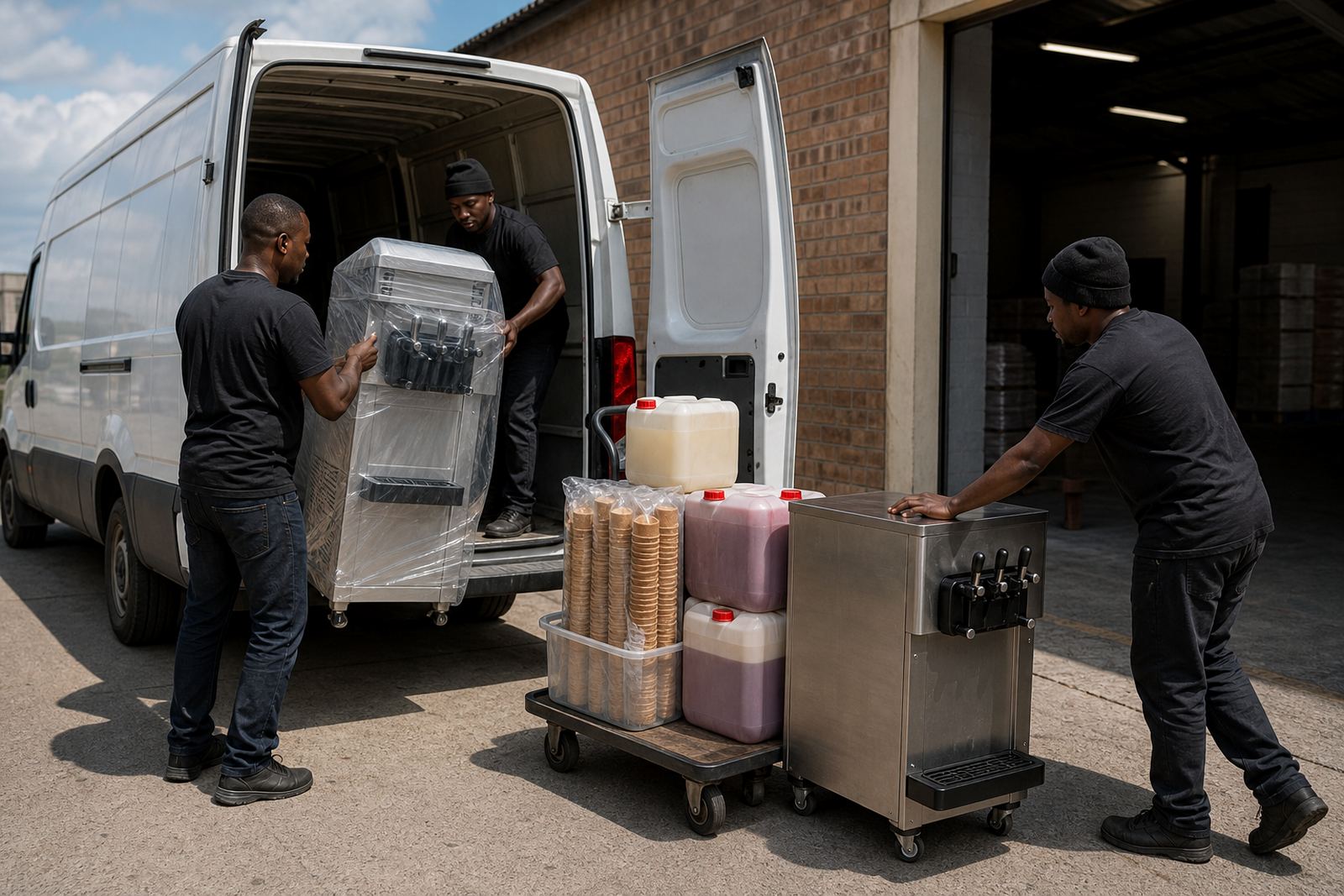
When you place an order, it helps to know your daily volume, the number of bowls or cones you sell and whether you serve one flavour or two. If your site is close to the coast, storage is also important because heat and humidity can affect cartons left open too long. Keep stock in a dry store, off the floor and away from strong odours. That simple step saves spoilage and keeps your mixes in good condition.
How to store mixes and cones correctly
Storage matters just as much as the product itself. Mixes should be kept in a cool, dry place with cartons sealed until use. Cones need protection from moisture, especially in Durban where the air can be humid for long stretches. Once a cone absorbs damp, it loses snap and the customer notices it straight away.
- Store cartons on shelving, not directly on concrete floors.
- Keep cones in their original packaging until service time.
- Do not leave open mix bags near windows, doors or prep sinks.
- Use stock rotation so older cartons are used first.
- Check best before dates before each delivery is opened.
If your site has limited back of house space, we can help you plan smaller, more frequent orders instead of overstocking. That is often better for busy cafes in Johannesburg and Cape Town where store rooms are tight and trading patterns shift through the week.
Serving cones, cups and the small extras that matter
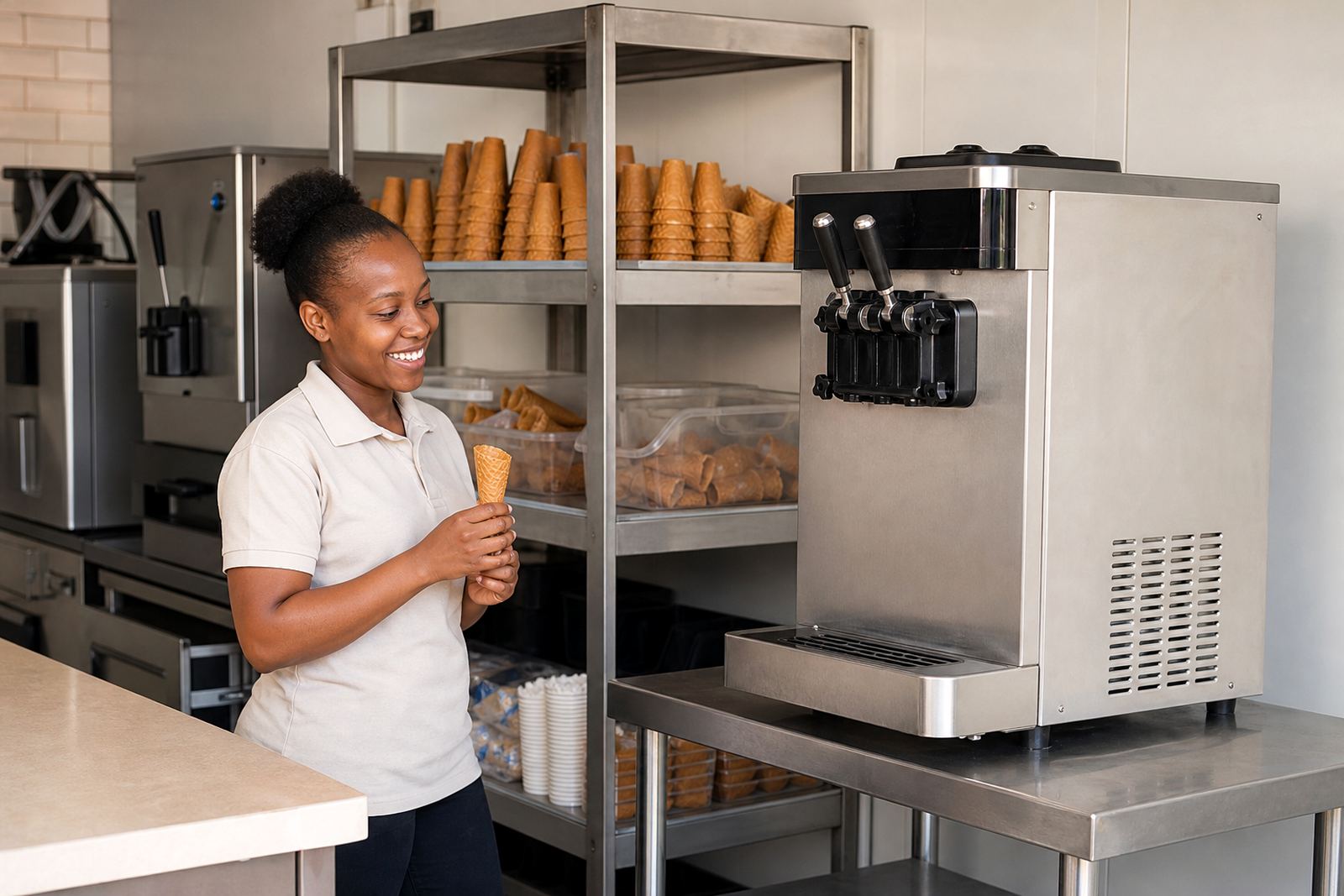
A good dessert service is about more than the machine. Cones, cups, spoons and napkins must be ready before the rush starts. In a kiosk or restaurant, the serving setup should be simple enough for a new operator to work cleanly and fast. That keeps queues short and reduces waste when staff change between shifts.
We supply a range of serving consumables to suit different counters and portion sizes. If you are selling single cones at school events in Gqeberha or family meals in Pretoria, the right cup and cone mix can make service easier and reduce breakage. It also helps to keep a small reserve of serving stock in case a delivery is delayed by traffic, weather or load shedding related courier delays.
- Choose cone sizes that match your portion scoop or soft serve swirl height.
- Keep cups nearby for customers who prefer a cleaner hand held option.
- Use napkins and spoons for takeaway orders and table service.
- Separate serving stock from cleaning chemicals and sanitising supplies.
Ordering by site type and trading volume
Different sites need different order patterns. A high traffic takeaway in Springfield Park may run through stock faster than a hotel coffee bar in Umhlanga, while a seasonal site in Cape Town may need extra cover before school holidays. When you send through an enquiry, tell us what you sell, how many days of cover you want and whether you need mixed flavours or a single core range.
For planning, it helps to think in boxes, not loose units. That makes receiving stock easier and gives your team a clear count for reordering. If you are opening a new outlet or moving to a larger counter, we can also help you align mix and cone supply with your machine capacity so you do not overorder. Clear stock planning keeps cash flow steadier and reduces waste from slow moving products.
Steps to get supply advice for a new or growing outlet
If you are setting up a new dessert point, the quickest way to get the right supply advice is to share a few practical details. That includes your town, machine type, expected serving times and whether you need support for daily trading or seasonal peaks. The more accurate the details, the better we can match the mix and cone range to your site.
- Send your location and the type of outlet, such as cafe, kiosk or restaurant.
- Tell us what machine you use and how many flavours you plan to run.
- Share your expected daily turnover and peak trading times.
- State whether you need soft serve, frozen yoghurt or both.
- Include any storage limits or delivery access issues at the site.
That process works well for customers in Durban, Johannesburg, Pretoria, Cape Town, Gqeberha and Pietermaritzburg. It also helps if you mention whether you need help with operator training or mix calibration, because the right supply plan should support the way your team actually serves customers on site.
Keeping service consistent through the season
Frozen dessert sales can move quickly with weather, school holidays and local events. On hot weekends, a cafe may double its normal turnover, while a rainy spell can slow things down sharply. The best way to stay ready is to keep a small buffer of mixes and cones, then top up before the stock gets thin. That way your machine stays running and your team does not scramble for last minute product.
For sites near the coast, humidity control is especially useful. Seal opened cartons well, store cones in clean dry containers and avoid leaving serving stock exposed near the prep area. If you are unsure about order timing, our support team can help you set a practical restock cycle based on your trading pattern. It saves time and keeps the menu steady for customers who return for the same flavour week after week.