

How to choose the right machine for your counter and trade volume
The best machine depends on your daily demand, available counter space, power supply and how many flavours you want to serve. A kiosk in a mall may need a compact unit with quick recovery time, while a busy restaurant or beachfront shop might need higher output and a second hopper for mixed service.
Before you choose, check three things: how many portions you sell on a peak day, whether you have space for airflow around the machine, and if your site can handle the electrical load. In areas where load-shedding is a factor, it helps to plan for backup power and a service routine that keeps product cold when the power comes back on.
- Small counters: compact soft-serve or yoghurt units
- Busier sites: higher capacity machines with faster recovery
- Mixed menus: pair the machine with cones and a reliable topping plan
What happens after I place an order and arrange delivery
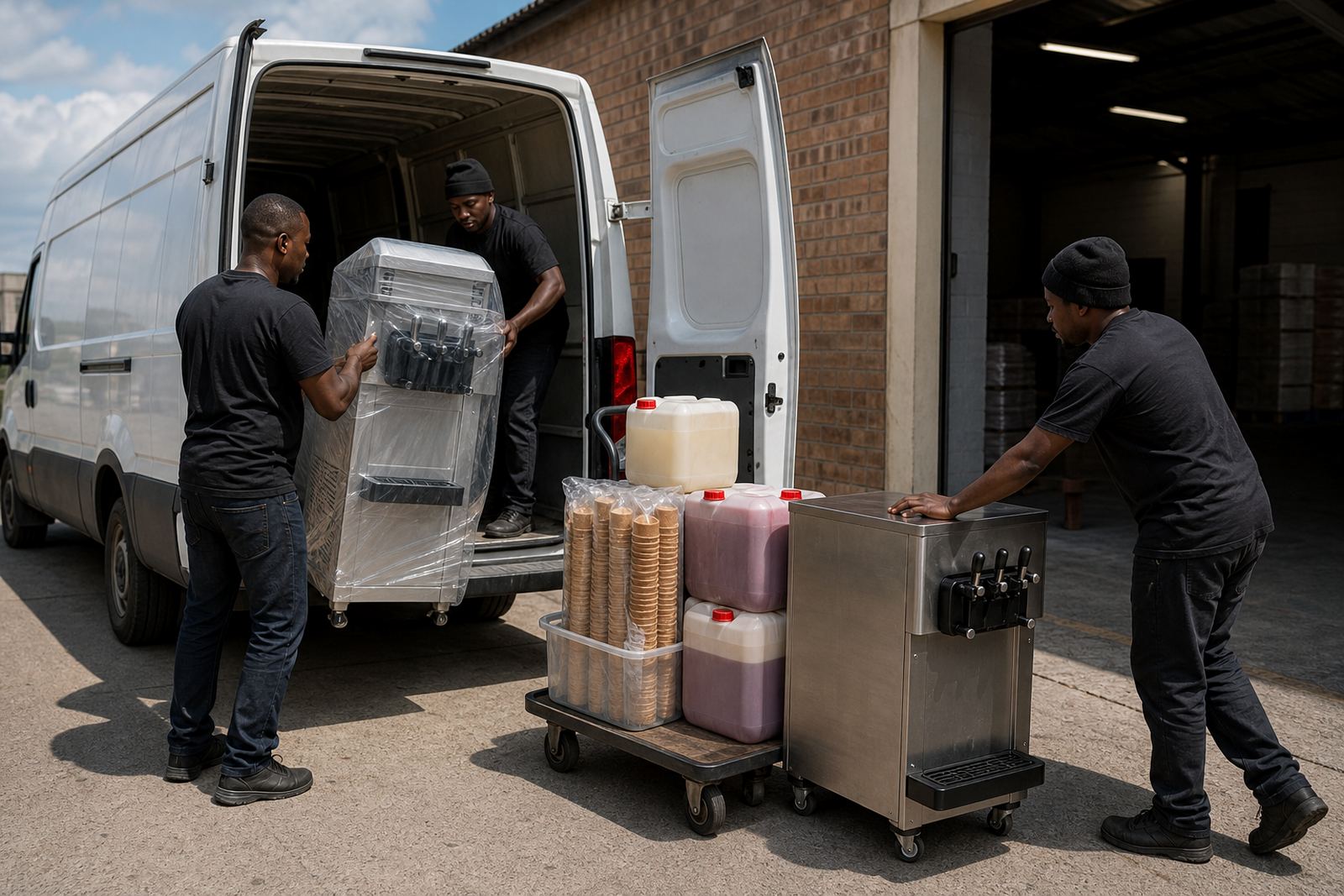
Once your order is confirmed, we help coordinate delivery to your site and plan the setup around your trading hours. Delivery into Durban, Springfield Park, Umhlanga and surrounding areas is straightforward, while out-of-town sites in Pretoria, Cape Town, Johannesburg or Gqeberha may need a little extra planning for access, off-loading and timing.
For safe handover, make sure the final position is ready before the machine arrives. Measure the doorway, counter height and floor space, and check that the area is clean, level and close to a suitable power point. If your site has strata rules, mall rules or municipal trading conditions, it is wise to have those sorted before the installation team arrives.
- Clear the installation area and mark the final position
- Confirm access for moving equipment through doors or lift areas
- Keep the floor dry and level for setup and testing
Do you install and commission the machine on site
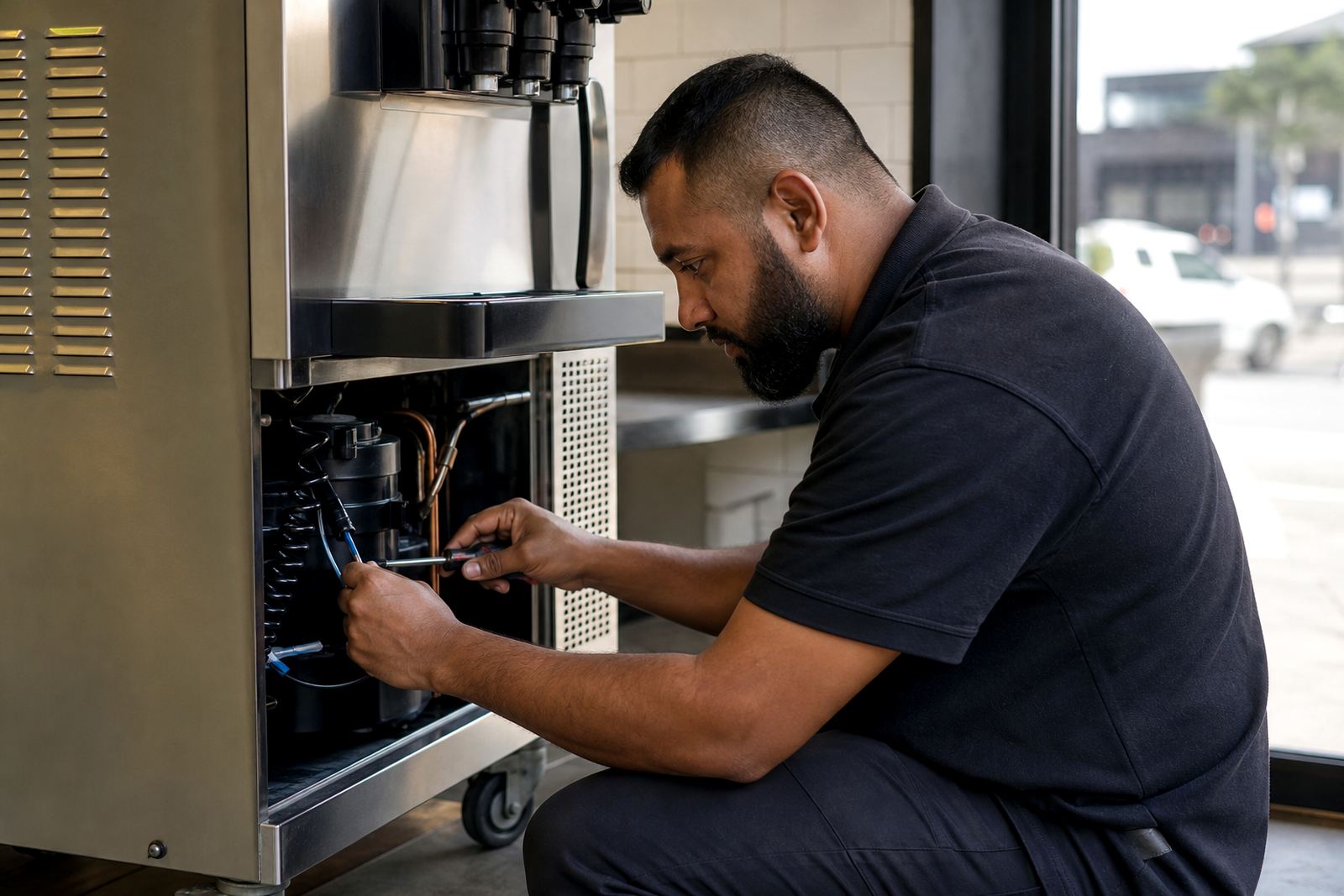
Yes, installation and startup commissioning are part of the support process. The machine is positioned, connected and checked before you start trading. We look at power supply, cooling space, mix flow and initial settings so the first day does not become a learning curve.
Commissioning also includes a practical check on output and consistency. If the mix is too thick or too thin, the texture changes, so we help set the machine correctly for your product and your serving style. This is where small details matter, especially in humid coastal conditions where product behaviour can shift during the day.
We also show your team how to keep the machine stable between rush periods, how long to wait after cleaning, and what to do if the display or texture changes unexpectedly. It is better to catch the problem early than lose stock, and that small check can save a lot of waste.
What cleaning and maintenance should staff do every day
Good cleaning habits keep product quality steady and reduce breakdowns. The daily routine should be simple enough for staff to repeat without skipping steps during a busy shift. If you are serving frozen yoghurt or soft-serve in a high-footfall area, cleaning needs to be part of closing time not an afterthought.
- Rinse and sanitise the product path at the end of trade
- Wipe external surfaces, handles and drip areas
- Check seals, nozzles and visible wear before reopening
- Store cones and dry goods in a clean, sealed space
We can also assist with a deep clean service, seal and parts replacement, sanitising supplies and season prep checks. In Durban and other coastal towns, humidity can affect storage and cleanliness quicker than people expect, so dry storage is important.
What support is available if the machine stops working
If a machine gives trouble, start with the simple checks first: power supply, breaker status, product level and visible blockages. If the unit has been switched off because of load-shedding, allow the system to stabilise before judging the texture or output. Some issues clear up after a short reset, while others need a technician.
Our support covers phone support, breakdown repairs, preventive maintenance and mix calibration. If the issue points to wear, damaged seals or a blocked product path, we can advise what needs attention and arrange the next step. The aim is to reduce downtime and keep the cold chain intact, because a dead machine on a Saturday can cost sales very quickly.
Can you help with relocations, seasonal prep and new staff training
Yes. If you are moving premises, refreshing a kiosk layout or preparing for a summer rush, we can help with site relocations, operator training and seasonal checks. A move should not be rushed. The machine must be drained, protected and reset correctly at the new site so it does not arrive damaged or out of level.
Training is especially useful when you have new staff or seasonal workers. We cover startup, shutdown, daily cleaning, mix handling and what to do when the product is not serving properly. A short structured handover saves time later, and it helps your team serve with confidence from day one.
- Relocation planning and repositioning at the new site
- Operator training for opening, serving and closing
- Season prep checks before peak trading periods