
Built for clean topping service at busy counters
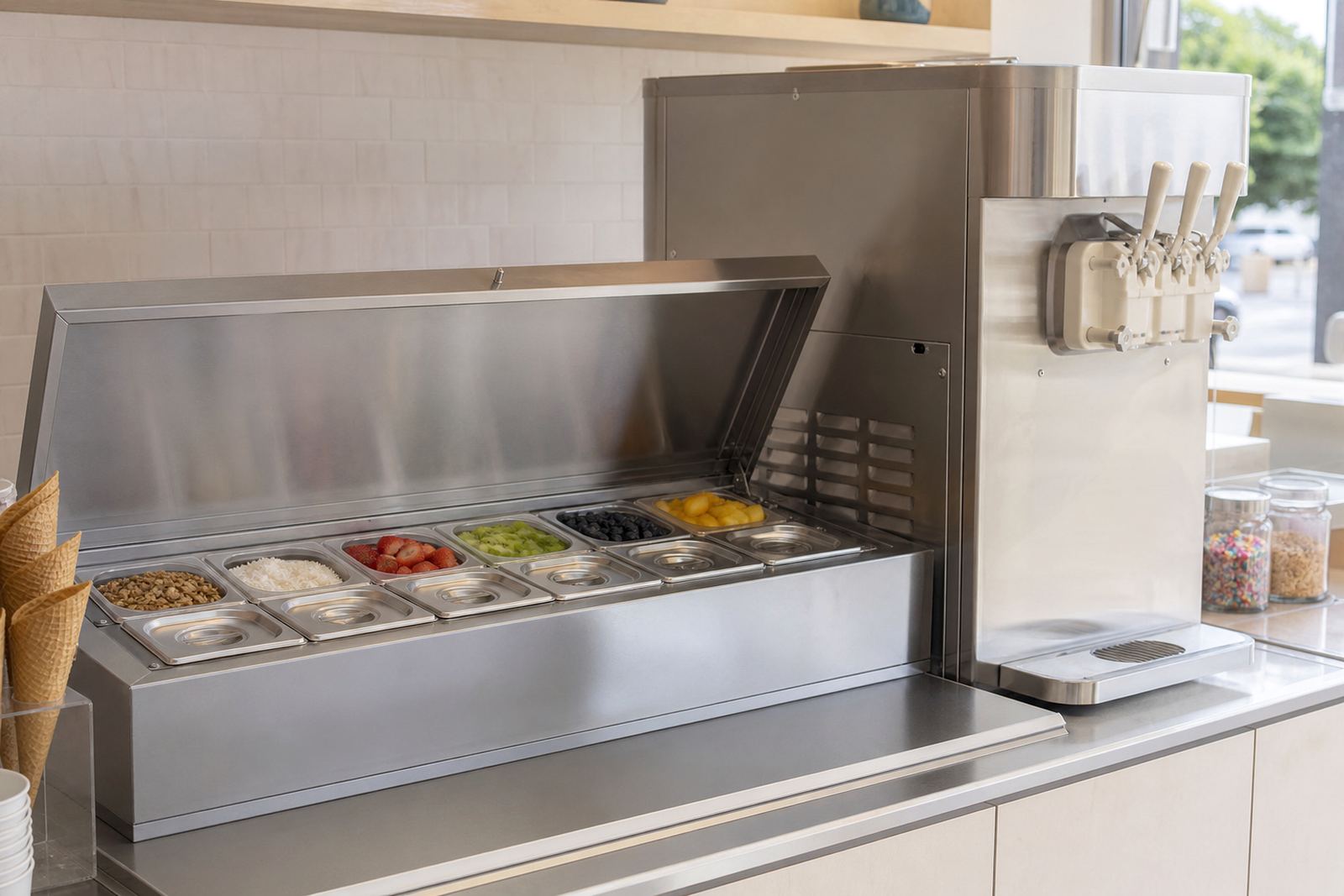
A topping prep station is a chilled work unit made for yoghurt bars, dessert counters and self-serve kiosks that need fast access to fruit, sauces, nuts and other toppings. It brings the prep area and the serving point together, so staff can work quicker and customers get a more organised service. For operators in Durban, Johannesburg or Cape Town, that matters during school rushes, weekend trade and load-shedding recoveries when every minute counts.
The unit is designed to hold gastronorm pans or similar ingredient pans in a chilled top rail, with a working surface that stays easy to wipe down. Depending on the layout, the station can sit behind the counter for staff service or in a front-facing position where customers can see toppings being added. It is a practical fit for cafes, kiosks, restaurants and dessert bars that want a cleaner serving flow without wasting space.
- Keeps toppings chilled and close to the serving point
- Supports faster service during peak trading hours
- Improves presentation at the counter
- Reduces repeated trips to the main fridge
Size options, pan layout and counter fit
Most topping prep stations are selected by counter length and the number of toppings you want to carry on a daily basis. A compact unit may suit a kiosk with 6 to 8 pans, while a larger counter model can hold 10 to 12 pans or more, depending on the internal tray arrangement. Widths commonly suit 900 mm, 1200 mm and 1500 mm counter sections, with depth chosen to leave enough space for scoops, lids and safe movement behind the counter.
When planning the layout, check how the station will sit next to your soft-serve machine, yoghurt dispenser or display cabinet. There should be room for operators to open lids, refill pans and keep the serving side uncluttered. In smaller shops, the station often works best with a straight run along the wall. In larger restaurants, a corner return or island-style setup can make service smoother and easer to monitor.
- Compact, medium and extended counter sizes available
- Pan count depends on menu variety and foot traffic
- Suitable for straight counters, corner counters and kiosk layouts
- Allows separation of wet toppings, dry toppings and sauces
Where it suits in South African food service
This type of prep station suits any site where frozen yoghurt or dessert toppings need to be organised and served quickly. In mall kiosks, it helps keep a small team moving without crowding the till area. In cafes and restaurants, it supports plated desserts, takeaway tubs and self-serve toppings, especially where the menu changes by season. Coastal towns like Durban and Gqeberha often need well-sealed chilled storage to handle humidity, while inland sites in Pretoria and Johannesburg usually focus more on power stability and easy cleaning.
It also works well in school canteens, leisure venues, family restaurants and hospitality venues that serve soft-serve alongside waffles, sundaes or fruit-based desserts. If your menu includes fresh strawberries, mango, crushed biscuits, syrup bottles and nuts, a dedicated prep station keeps everything grouped properly. That makes portion control simpler and the counter looks neater, even when trade is busy.
- Frozen yoghurt bars and dessert kiosks
- Family restaurants and cafes
- Mall food courts and takeaway counters
- Hospitality venues and event service points
Power, cooling and installation basics
Before ordering, confirm what power supply your site can support and where the unit will be installed. Most chilled prep stations are intended for standard electrical supply, but the exact load depends on the cabinet size, compressor arrangement and ambient conditions. If the station sits near other heat-producing equipment, ventilation becomes important so the unit can hold safe temperatures through a busy trading day. It is worth checking the site during building work or a fit-out, not after the counter has been fixed in place.
Installation should allow clear access for cleaning, servicing and ingredient loading. The unit needs a level surface, enough space for airflow and a position that does not interfere with foot traffic or service queues. In some locations, especially where municipal compliance is strict, food-safe drainage, splash control and easy sanitation access may also be part of the planning. If the site uses backup power, the station should be included in the load check before trading starts.
- Confirm voltage, plug type and available circuit capacity
- Allow ventilation space around the cabinet
- Plan for level flooring and safe counter access
- Check backup power if the store trades during outages
Care, cleaning and ongoing servicing
A topping prep station should be cleaned daily, with pans removed, washed and dried before refilling. Wipe down the lid rail, worktop and door seals with food-safe sanitising supplies, then check that the temperature display is reading correctly once the unit has settled again. In humid coastal conditions, this routine matters even more because moisture can collect around lids, seals and hinge points. A quick clean after close of trade often prevents bigger problems later.
Our service team can assist with preventive maintenance, deep clean service, seal and parts replacement, startup checks and breakdown repairs. Where a unit has been moved from one site to another, a fresh calibration and startup commissioning check is a good idea. If the station is used hard every day, book season prep checks before holiday trading or school break periods so the temperature control and seals are ready. It saves time and avoids avoidable downtime, which is money lost.
- Daily wash-down and sanitising of pans and surfaces
- Regular seal checks and temperature verification
- Deep cleaning on a scheduled basis
- Servicing before peak season or after relocation
What to check before you place an order
Before you confirm a topping prep station, check the menu you want to serve and how many toppings need chilled storage at one time. Count the pans you will use for sauces, fruit, biscuits, nuts, chocolate pieces and other items. You should also measure the available counter space carefully, including access behind the unit for refilling and cleaning. If you are working in a new shop or kiosk, compare the station size with your till, soft-serve machine and display layout so the full service flow works properly.
It is also important to consider support after delivery. Ask whether installation, operator training, maintenance and spare parts support are available for your area, whether that is Springfield Park, Umhlanga, Pietermaritzburg or elsewhere in South Africa. A good prep station should not only fit the counter, it should fit the way your team works every day.
- How many toppings must be chilled at once
- Available counter length, depth and service access
- Power supply and ventilation at the site
- Cleaning routine and staff training needs
- Spare parts and servicing support in your area
Key facts
| Product type | Chilled topping prep station for frozen yoghurt and dessert counters |
|---|---|
| Typical sizes | Compact, medium and extended counter formats, depending on pan count |
| Pan capacity | Usually 6 to 12+ ingredient pans, depending on model and layout |
| Construction | Food-safe stainless steel body with removable pan holders and lid rail |
| Power requirement | Standard electrical supply, exact load depends on cabinet size and cooling system |
| Best suited for | Cafes, kiosks, dessert bars, restaurants and self-serve yoghurt counters |