
Built for steady service in busy restaurant kitchens
The Restaurant Volume Package is set up for restaurants that serve frozen desserts every day and need the machine to keep up with peak lunch and dinner trade. It is a good fit for dessert menus, buffet counters, family restaurants, holiday venues and high-turnover sites that want soft-serve or frozen yoghurt without slowing service at the pass.
This package is usually chosen by operators who need cleaner workflow behind the counter, less waste, and fewer interruptions during service. The equipment is selected for staff who need clear controls and easy daily handling, not complicated routines. With the right mix, the product holds texture well through a service rush and is simple enough for front-line staff to learn quickly.
Across Durban, Johannesburg, Pretoria, Cape Town and Gqeberha, restaurant teams often need equipment that can handle heat, humidity and load-shedding planning at the same time. That is where the package works well, because it is specified with local conditions in mind and sized for real kitchen use, not show pieces.
Package sizes and output options
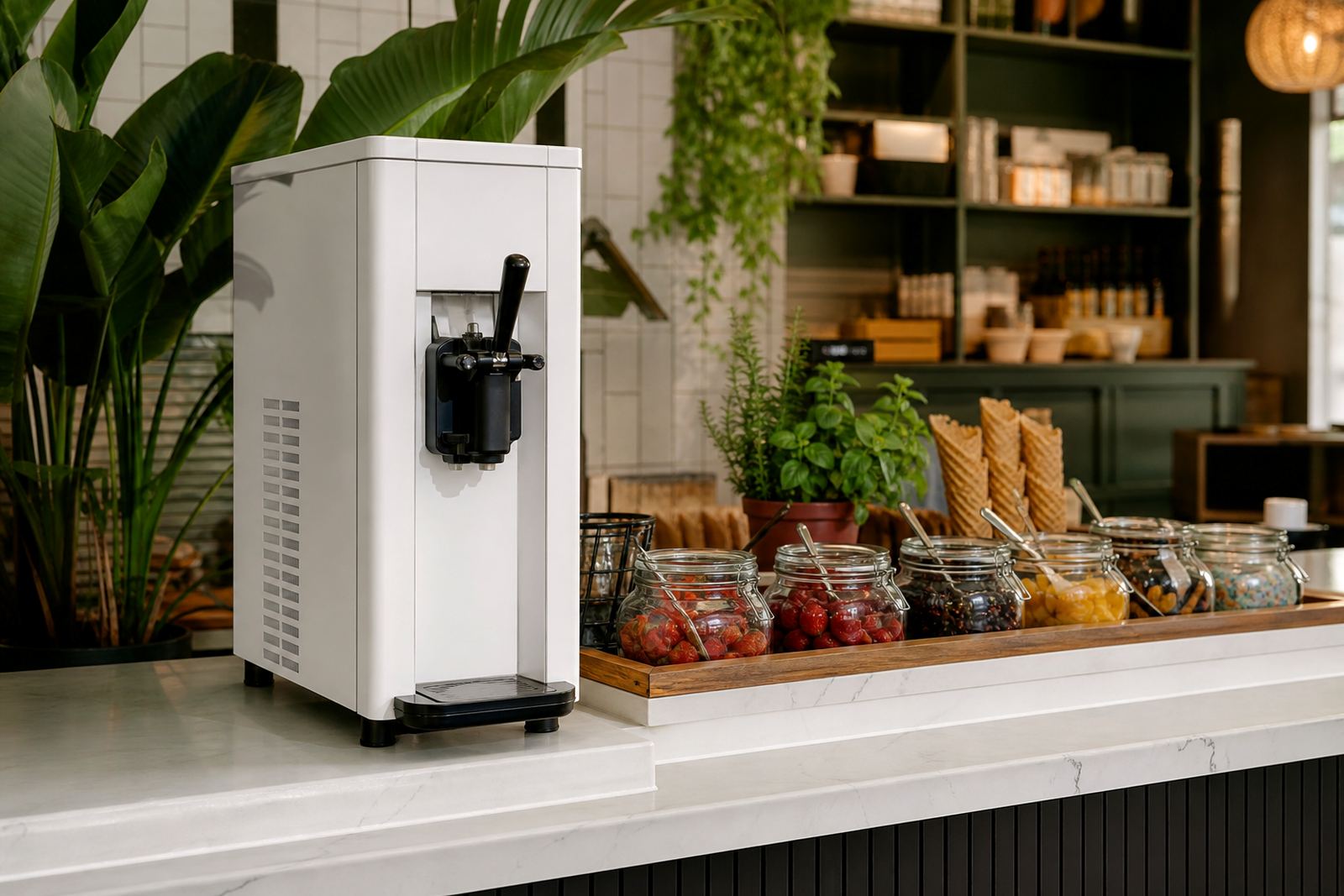
The package can be supplied in different output formats depending on how much dessert volume your restaurant moves each day. For smaller dining rooms, a single-flavour countertop unit may be enough. For higher traffic sites, a twin-flavour machine or a higher-output floor model is better suited, especially where you need faster service and more flexibility with flavour rotation.
- Single-flavour soft-serve machine for focused menus and lower daily volume
- Twin-flavour machine for vanilla, yoghurt or mixed flavour service
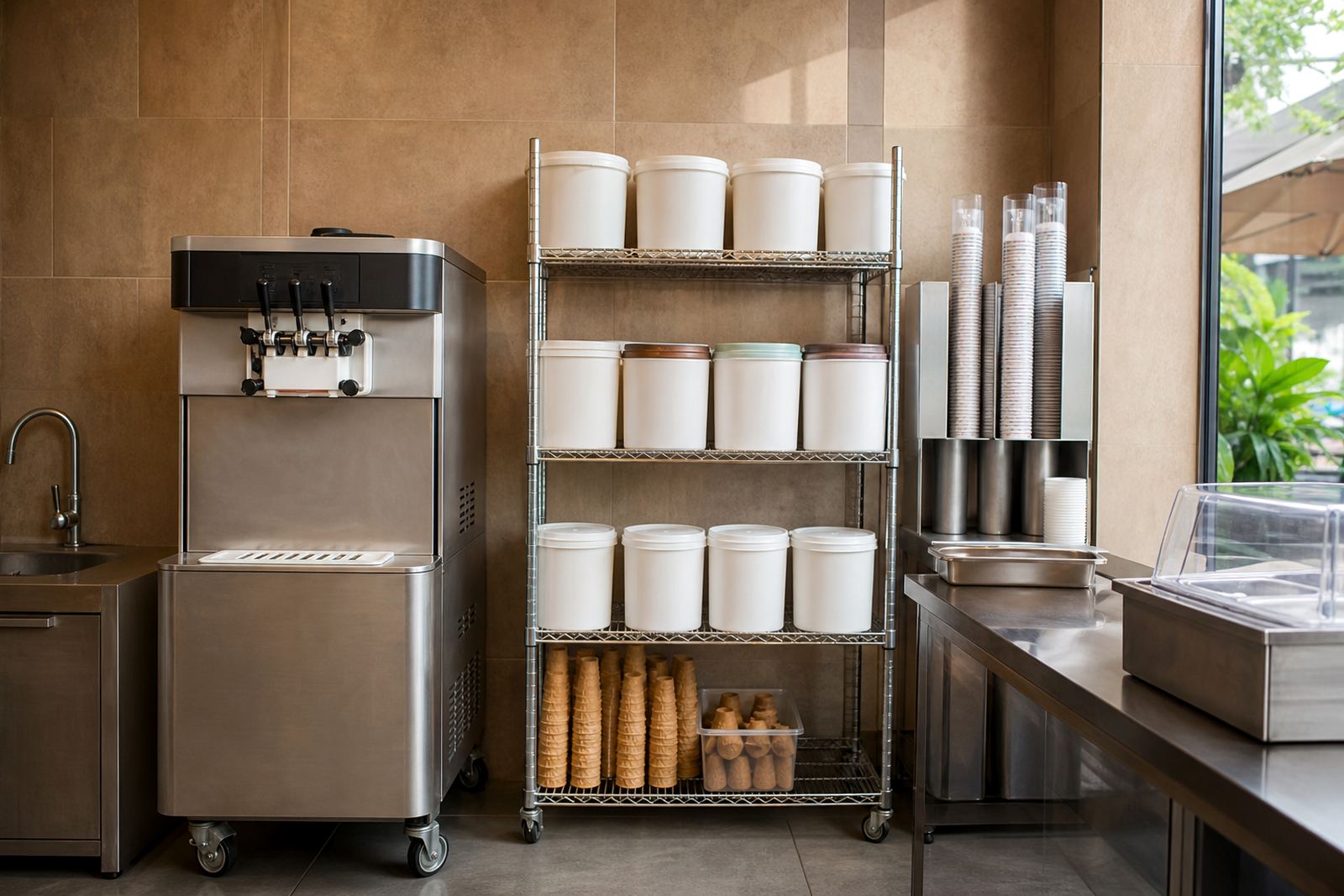
- Floor-standing option for heavier output and longer serving windows
- Countertop option where space behind the till is limited
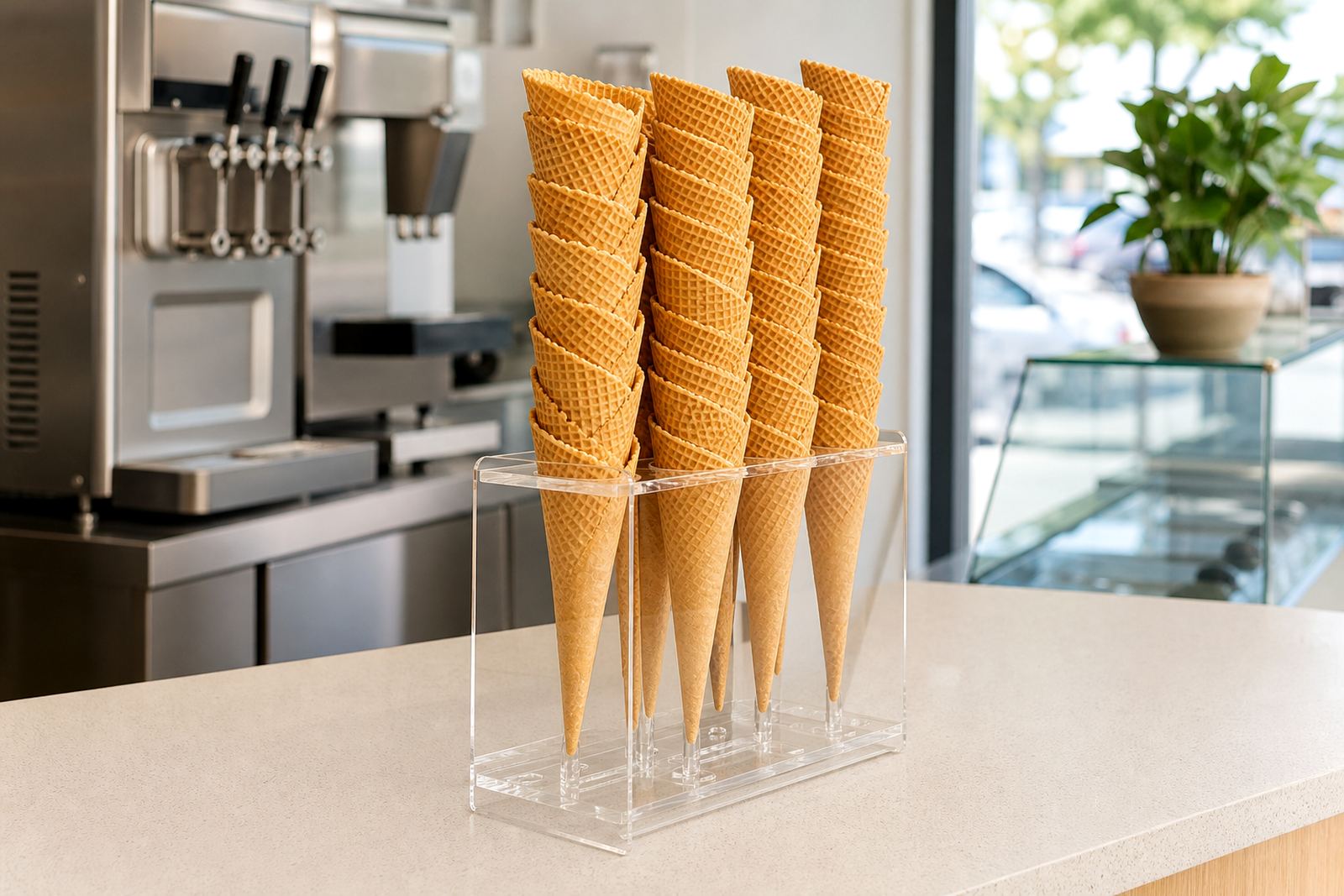
- Mix supply and cone options matched to your menu style
As a guide, a compact machine is better for cafés and smaller restaurants serving dessert as part of the main menu, while larger models suit venues with a dedicated dessert station or high weekend traffic. Output depends on product type, ambient temperature and operator handling, so the final choice should be based on expected servings per hour rather than guesswork.
Restaurants in coastal areas often benefit from a slightly stronger service buffer because heat and humidity can affect holding and recovery. Inland sites can often focus more on peak-time batch planning. Either way, it helps to match the machine size to actual trading patterns, not only floor space.
Where this package suits best
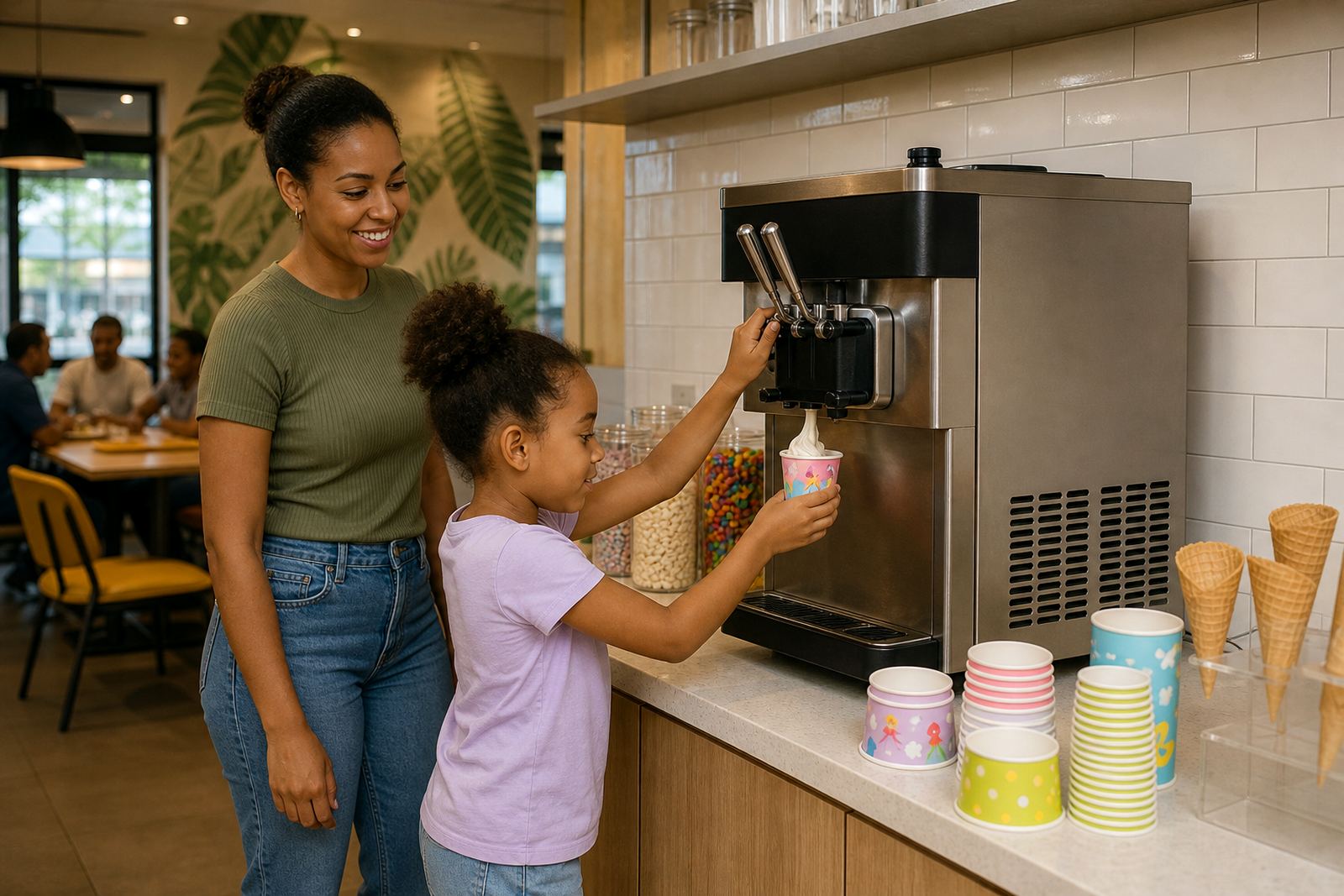
This package suits restaurants that want dessert to be a reliable margin line instead of an afterthought. It works well in sit-down restaurants, casual dining, family eateries, coffee shops with a dessert counter, food courts and venue kitchens where guests expect quick service and consistent portions.
It also suits operators who need a simple back-of-house setup for both dine-in and takeaway. If your team is running burgers, grills, chicken, pizza or buffet service, frozen dessert can be added without creating too much extra pressure on the line. The package helps keep service tidy because the mix, cones and cleaning routine are planned around day-to-day kitchen flow.
For restaurants in malls or busy retail strips, the package can be set up to support longer trading hours with scheduled cleaning and product top-ups. In places like Umhlanga, Springfield Park or central Gqeberha, that kind of planning matters because staff turnover, foot traffic and peak periods can change quickly.
- Restaurants wanting dessert speed without adding extra kitchen labour
- Sites with limited prep space but regular dessert demand
- Operators needing a simple menu add-on for better basket spend
- Venues that require portion control and consistent product texture
Installation, power and site planning
Installation is handled with practical site checks so the machine is placed where staff can work around it safely. Before fitting, the floor space, counter height, ventilation and access for cleaning should be checked. The machine should not be boxed into a tight corner where heat builds up and service becomes awkward.
Power needs depend on the model selected. Most restaurant units will need a stable electrical supply, and larger output machines may require a dedicated circuit. Where the site runs on generator backup or inverter support during load-shedding, it is important to confirm the starting load and running load before ordering. A weak supply can lead to poor freezing performance and nuisance trips.
Some restaurant owners also need to consider gas-related kitchen planning, especially where the site already carries a mixed utility setup. While the dessert machine itself is typically electric, the overall kitchen layout should allow safe access to mains power, drainage where needed and clear movement for service and cleaning. In coastal areas, corrosion control and moisture management should also be part of the install plan.
- Confirm available voltage and circuit capacity before delivery
- Allow clear space for daily cleaning and rear access
- Check whether generator or inverter support will be used
- Plan placement away from grease heat and washing splashes
Daily care and servicing that keep output steady
To keep the machine working properly, the daily routine should be simple and consistent. Staff should rinse, wash and sanitise the contact surfaces, check seals, and clear any product build-up before closing. If the unit is used hard during service, a quick mid-shift wipe-down helps prevent sticky residue and keeps the front area neater for the next session.
Preventive maintenance is important for restaurants that trade six or seven days a week. Seals, wear parts and mix settings should be checked on a planned cycle rather than after something has failed. This reduces down time and helps avoid surprise repair costs during a busy weekend. Our technical team can assist with startup commissioning, operator training, breakdown repairs, deep clean service, mix calibration and season prep checks.
In humid areas like Durban and the North Coast, regular cleaning matters even more because moisture can affect stored product and surrounding fittings. In busy inland kitchens, dust and uneven power supply can create different issues, so the service plan should match the site conditions. A small slip in routine can lead to bigger trouble later, so the machine should be treated like other high-use kitchen equipment.
- Clean and sanitise daily after trade
- Check seals and visible wear parts on a set schedule
- Book deep cleaning before peak season or after heavy use
- Use trained staff for mix calibration and first-line handling
What to check before you place an order
Before ordering the Restaurant Volume Package, it helps to confirm exactly how your menu will work. Decide whether you need soft-serve, frozen yoghurt or both, and how many servings you expect during a normal weekday versus weekend trade. That gives a clearer idea of machine size and whether a single or twin-flavour setup makes more sense.
You should also check your available counter space, power point position and whether the machine will be placed in a customer-facing area or at the back of house. If the site is being moved or refitted, allow enough time for site relocations and commissioning so the machine is not rushed into service before it is properly set up.
Mix type, cone supply and storage space also need attention. Some restaurants want a stronger yoghurt profile, while others need a sweeter dessert mix that suits family dining. The right choice depends on your menu, customer base and how much room you have for dry storage and chilled stock. It is better to sort these details upfront than to discover a mismatch after delivery.
- Expected servings per day and peak-time volume
- Preferred flavour profile and menu role
- Available power supply and backup arrangements
- Space for cleaning access, stock and staff movement
- Whether you need installation, training and first fill support
Key facts
| Product type | Restaurant volume soft-serve or frozen yoghurt package |
|---|---|
| Typical configuration | Single-flavour, twin-flavour or higher-output floor model |
| Power requirement | Dedicated electrical supply, model dependent |
| Use case | Restaurants, cafés, kiosks and mixed-service venues |
| Support options | Installation, commissioning, training, servicing and repairs |
| Supply range | Machines, mixes, cones, sanitising supplies and parts |