Built for compact trading, not just display
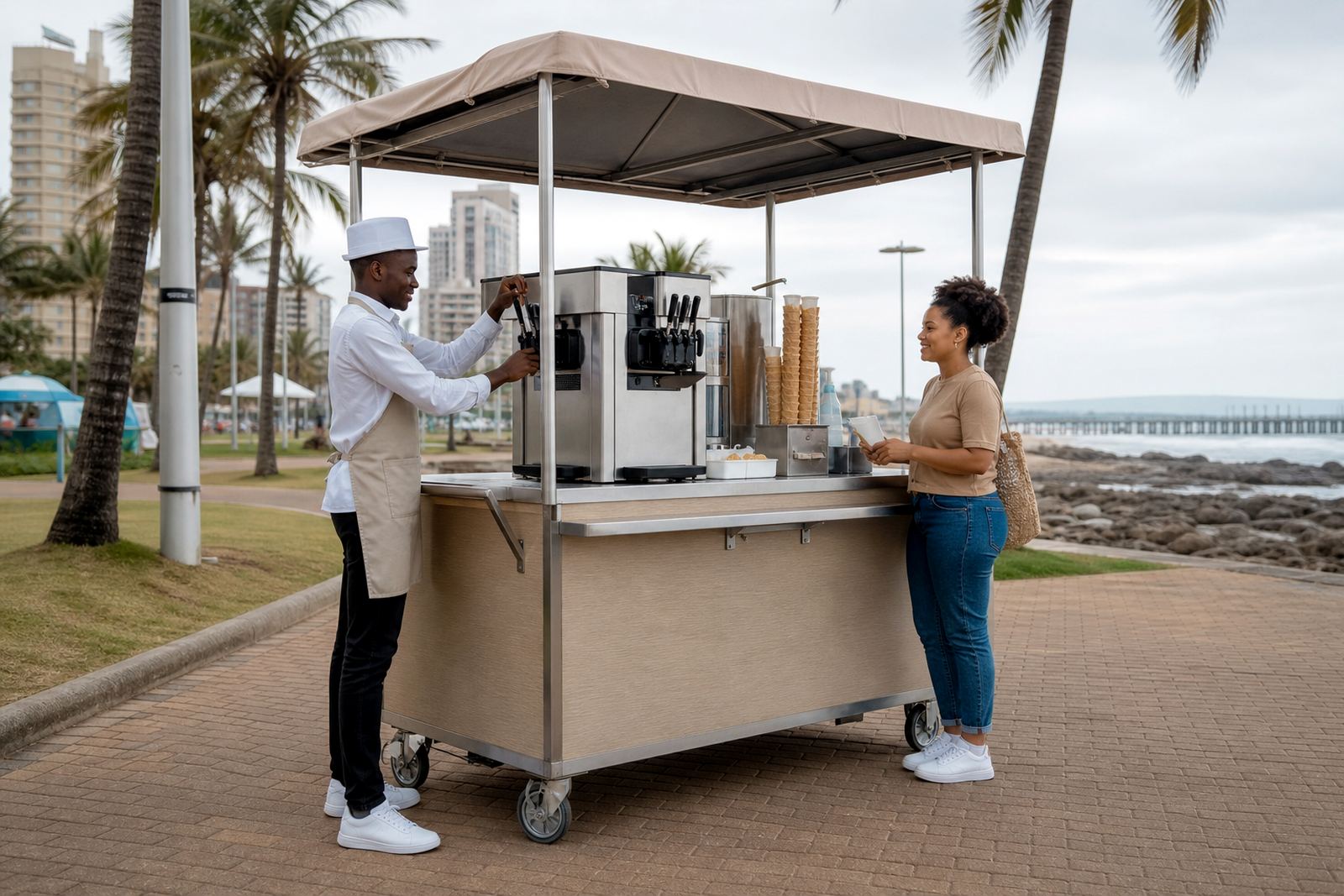
The Mobile Cart Unit is designed for operators who need a neat, practical serving point that can move between sites. It works well for product launches, school events, sports days, hotel forecourts and weekend trading where a full fixed counter is not possible. The cart gives you a defined serving area, storage space for cones and mixes, and a tidy front that presents well to customers.
For Durban and other coastal towns, the cart is a good choice when you need equipment that can be moved indoors after trading hours to protect it from humidity and salt air. In hotter inland areas, it helps keep the service point organised and easier to clean at the end of the day. The layout suits one operator or two staff members, depending on queue size and the machine fitted to it.
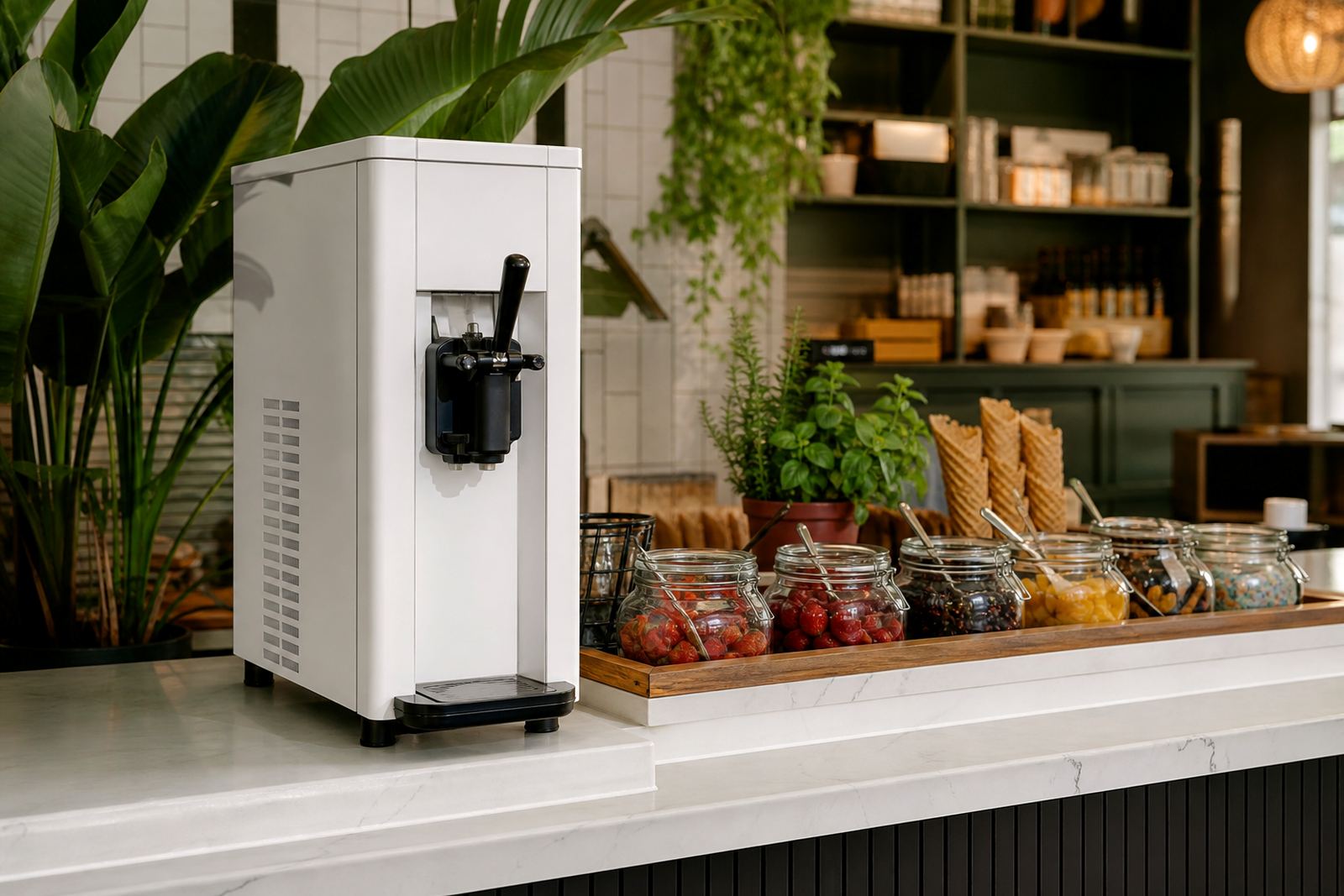
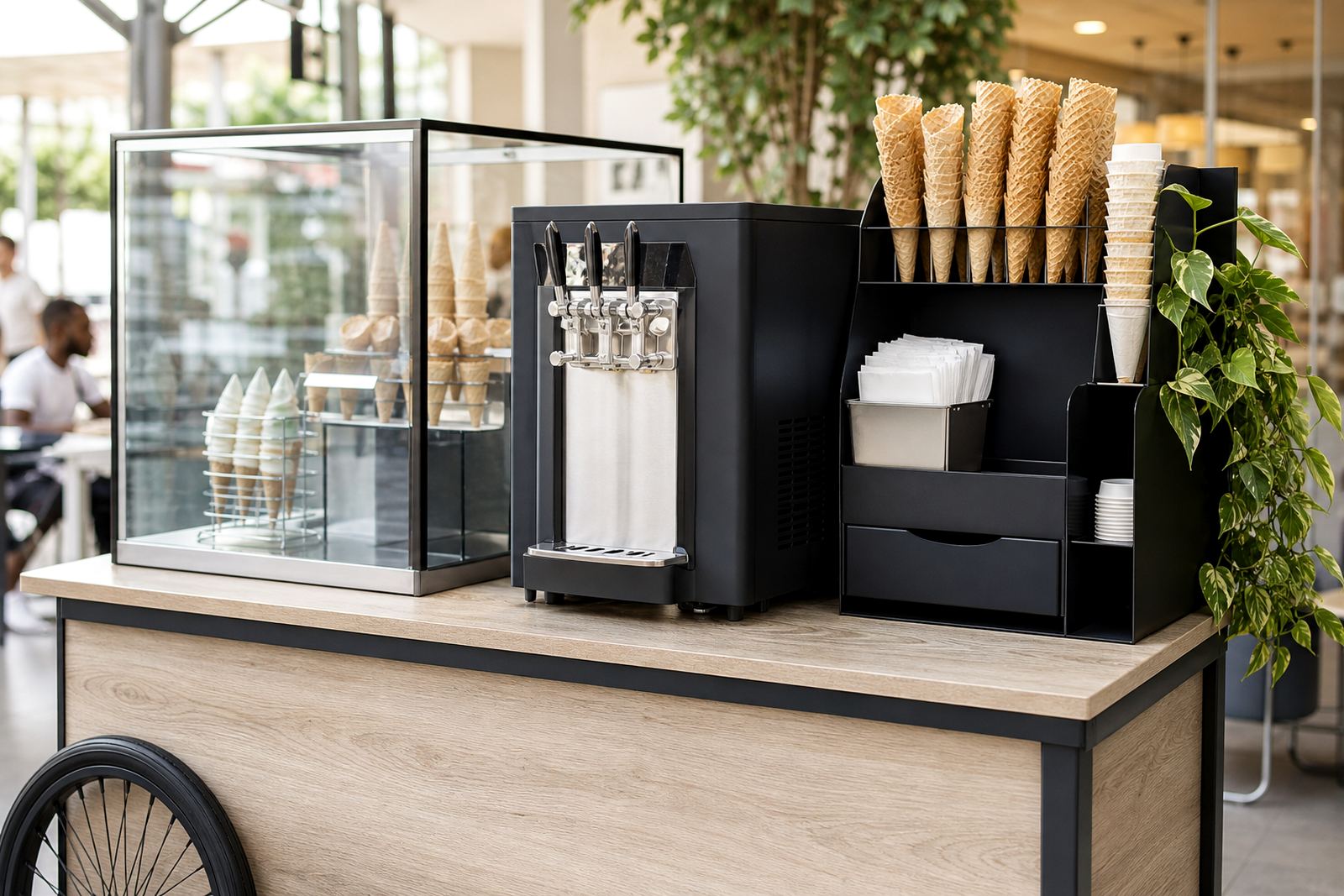
Most units are supplied with space for a soft-serve or frozen yoghurt machine, overhead branding panel and lockable storage. The structure is made for daily handling, with castors for movement and brakes for stability during service.
Sizes, layouts and serving options
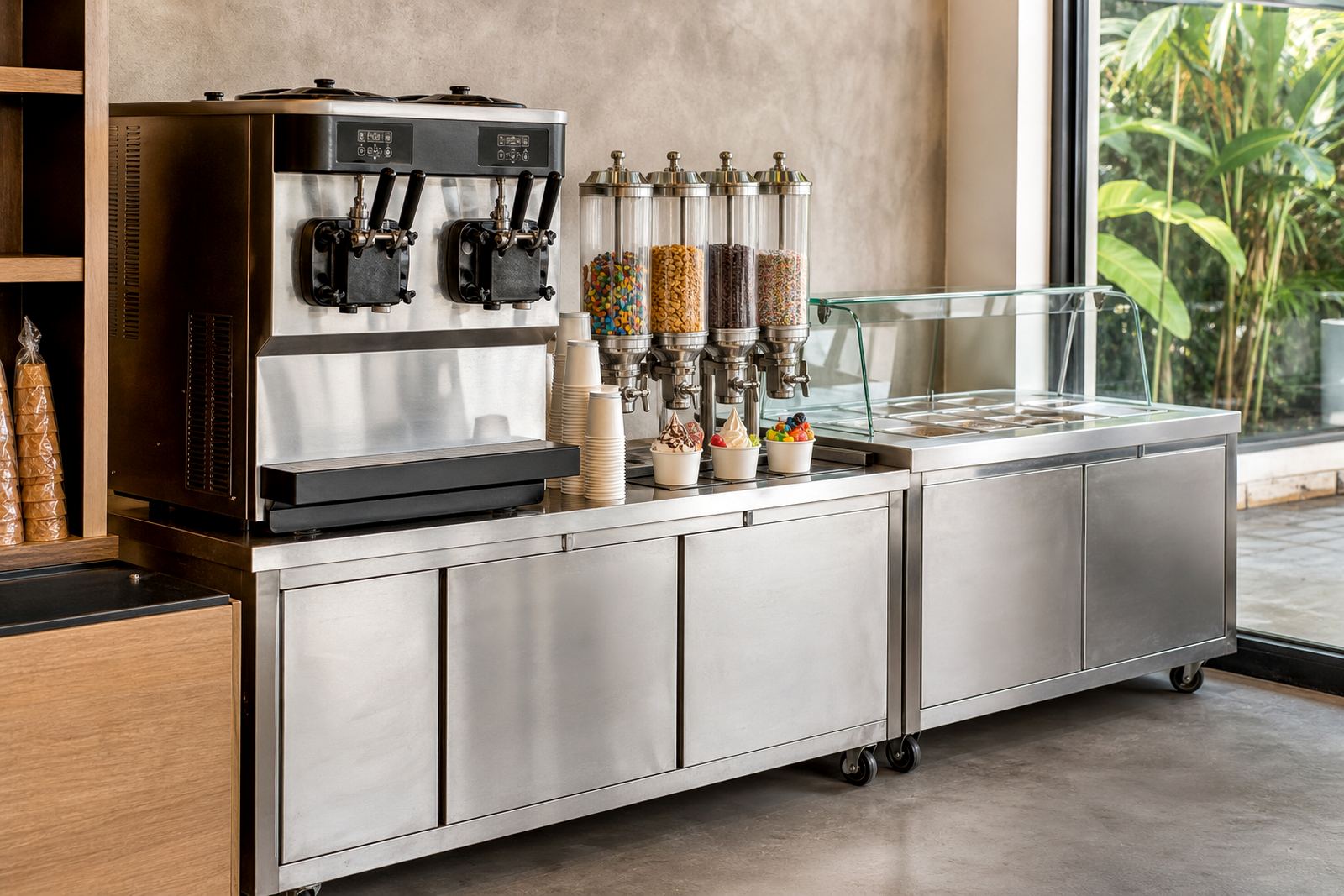
Mobile cart units are usually specified to match the machine you plan to use and the space available at your site. A compact version is suitable for one machine and a small accessory area, while larger units allow extra storage, a second flavour option or a more generous worktop. When planning the layout, allow enough room for cone holding, topping containers and easy access to the drip tray. Small details matter when the queue starts moving.
Common options include open front service, enclosed side panels, signage space and under-counter storage. Some operators prefer a lighter cart for quick site changes, while others choose a heavier frame for more frequent use in shopping centres or hospitality venues. If you need to work from a kiosk-style footprint, the cart can be set up to reduce clutter and keep the service area clear.
- Single machine layout for smaller venues and promotional stands
- Extended counter space for cones, toppings and sanitising supplies
- Lockable storage for tools, paper goods and backup items
- Castors with brakes for positioning on flat indoor surfaces
Where the cart works best
This unit is a strong fit for cafés, kiosks, restaurants, school tuck shops, market traders and mobile event operators. It is also useful for temporary installations at expos, church gatherings, wedding venues and staff canteens. In Johannesburg, Pretoria and Cape Town, it suits venues that need a visible dessert point without committing to a permanent service counter.
For beach towns and high-footfall tourist areas like Umhlanga and Gqeberha, the cart gives you a practical way to trade where customers are already moving around. In Pietermaritzburg and surrounding inland areas, it can be positioned for weekend foot traffic, school functions or private venue hire. The cart is best on level ground, with access to clean power and enough space for staff to serve safely.
It is not just about looks. The unit helps organise the work area so operators can serve faster, manage queues and keep product presentation consistent. That is especially useful during load-shedding planning, when you may need to switch over quickly or move to a backup operating plan.
Installation, power and practical site needs
Installation starts with checking the cart dimensions, the machine footprint and the route into the site. Door widths, lift access, ramp angles and floor level all matter. If the cart must move between storage and trading areas, plan for a turning circle that allows safe handling without scraping panels or damaging the wheels. A simple site check before delivery saves time and avoids hassle later.
The power requirement depends on the machine fitted to the cart, but most setups need a standard 220V supply with enough capacity for refrigeration and service equipment. In areas with frequent load-shedding, operators should plan for a backup power arrangement that matches the machine load, especially if the cart will trade through peak hours. If a generator or inverter is being used, the output must be suitable for motor starting and stable running. For some sites a dedicated circuit is the best option.
- Check floor strength and levelling before the cart is moved in
- Confirm socket position, cable length and access to a safe isolator
- Allow clearance for opening lids, cleaning and daily refilling
- Keep the cart away from direct rain exposure unless the site is sheltered
Care, cleaning and ongoing servicing
A mobile cart unit is easiest to manage when cleaning is part of the daily routine. Wipe down the serving surfaces, remove spills straight away and keep the wheels free of sugar residue and dust. If the cart operates near the coast, the metal parts should be checked more often for moisture build-up and early signs of corrosion. A quick rinse is not enough, the corners and underside need attention too.
We recommend preventive maintenance to keep the cart and fitted machine in good working order. That includes checking seals, switches, castors, fittings and any storage doors that get used frequently. If the unit is moved often between venues, the technician should look at alignment and vibration wear during service visits. Replacement parts and sanitising supplies should be kept on hand so you are not caught short during a busy weekend.
Deep cleaning is important before season changes and after long events. It helps protect product quality and keeps the serving area presentable for customers. Our team also supports startup commissioning, operator training and season prep checks so the cart is ready when trading begins.
What to confirm before you order
Before ordering, confirm the machine model, the number of flavours you want to serve and the space available at your site. It also helps to know whether the cart will be used indoors, outdoors or both, since that affects storage, finishing and site movement. If the cart needs to travel to multiple branches, make sure it can fit through the narrowest access point on the route.
You should also check the following points:
- Required cart width, depth and working height
- Whether you need one machine or a dual-flavour setup
- Power access, cable routing and backup power plans
- Storage for cones, mixes, cleaning items and spare parts
- Any venue rules on trading hours, noise or equipment placement
- Transport method for site relocations and off-site events
If you are unsure which cart format suits your operation, our team can help with measurements and practical advice based on your site conditions. We work with cafes, kiosks and restaurants across Durban, Johannesburg, Pretoria, Cape Town and Gqeberha, so we understand the realities of trading in different spaces. A good fit from the start saves a lot of back and forth later.
Key facts
| Product type | Mobile serving cart for soft serve and frozen yoghurt |
|---|---|
| Typical footprint | Compact single-machine or extended counter layout |
| Material finish | Wipe-clean food-service surfaces with durable frame |
| Mobility | Heavy-duty castors with locking brakes |
| Power needs | 220V site supply, subject to fitted machine requirements |
| Best use | Promotions, venues, kiosks, compact event trading |