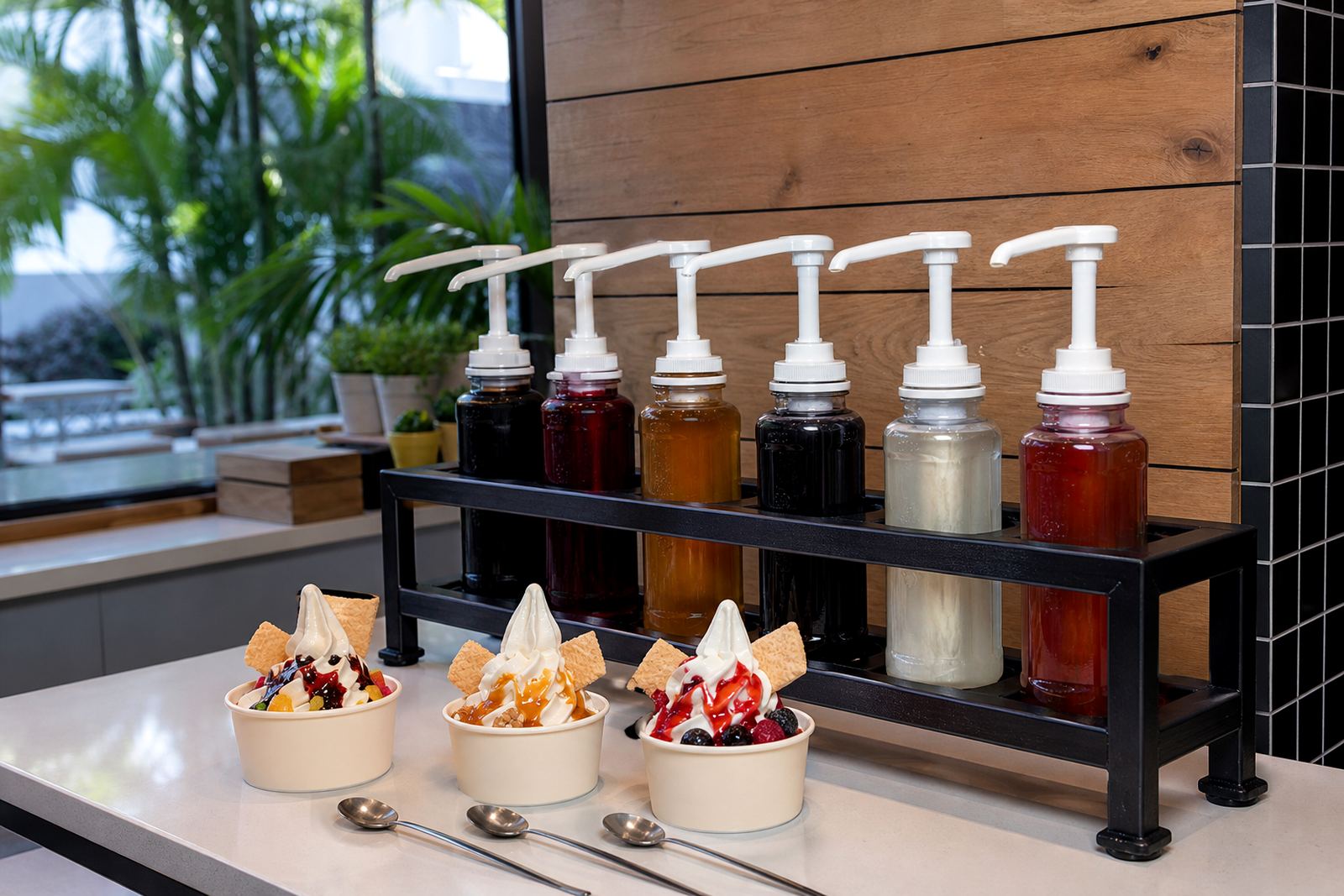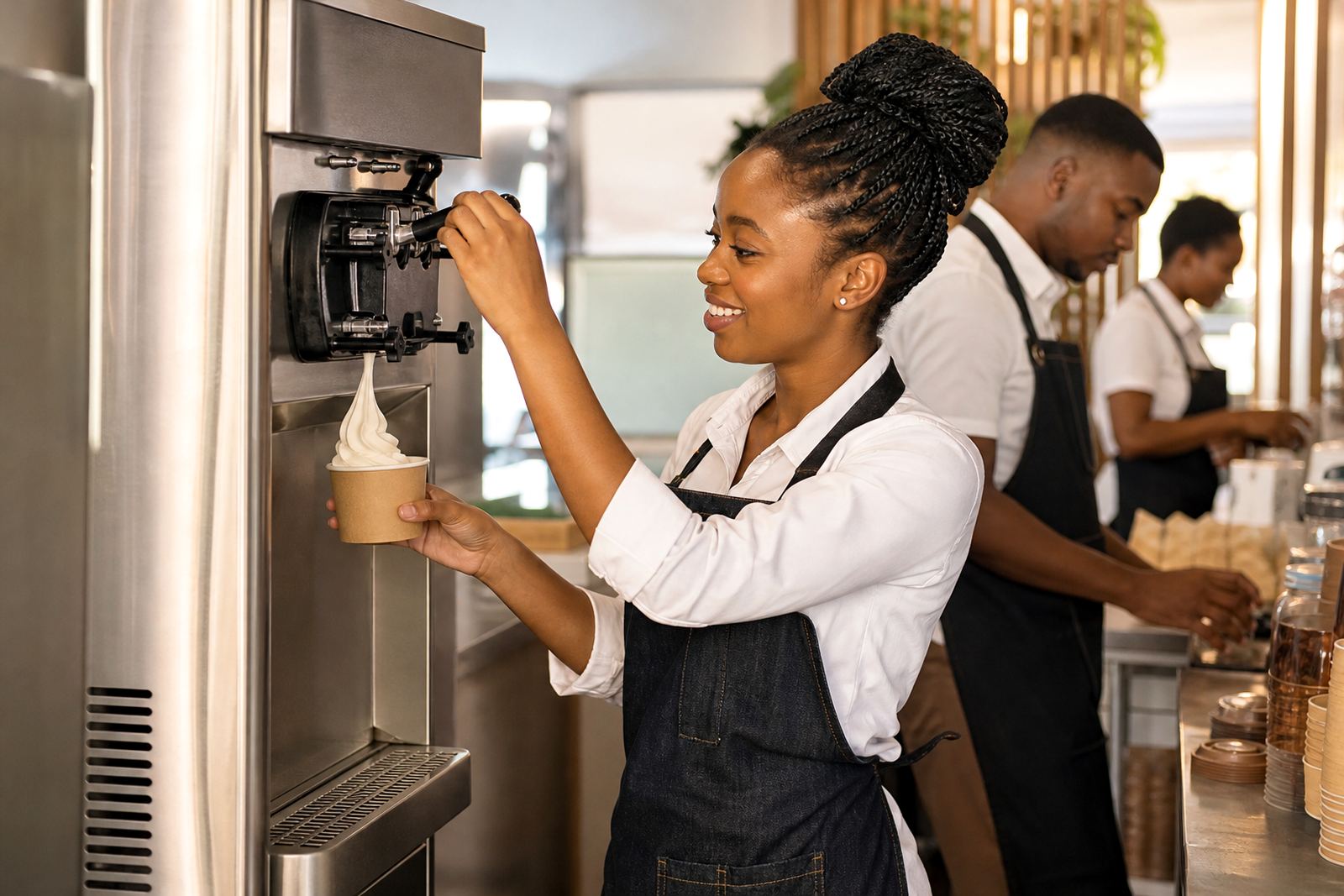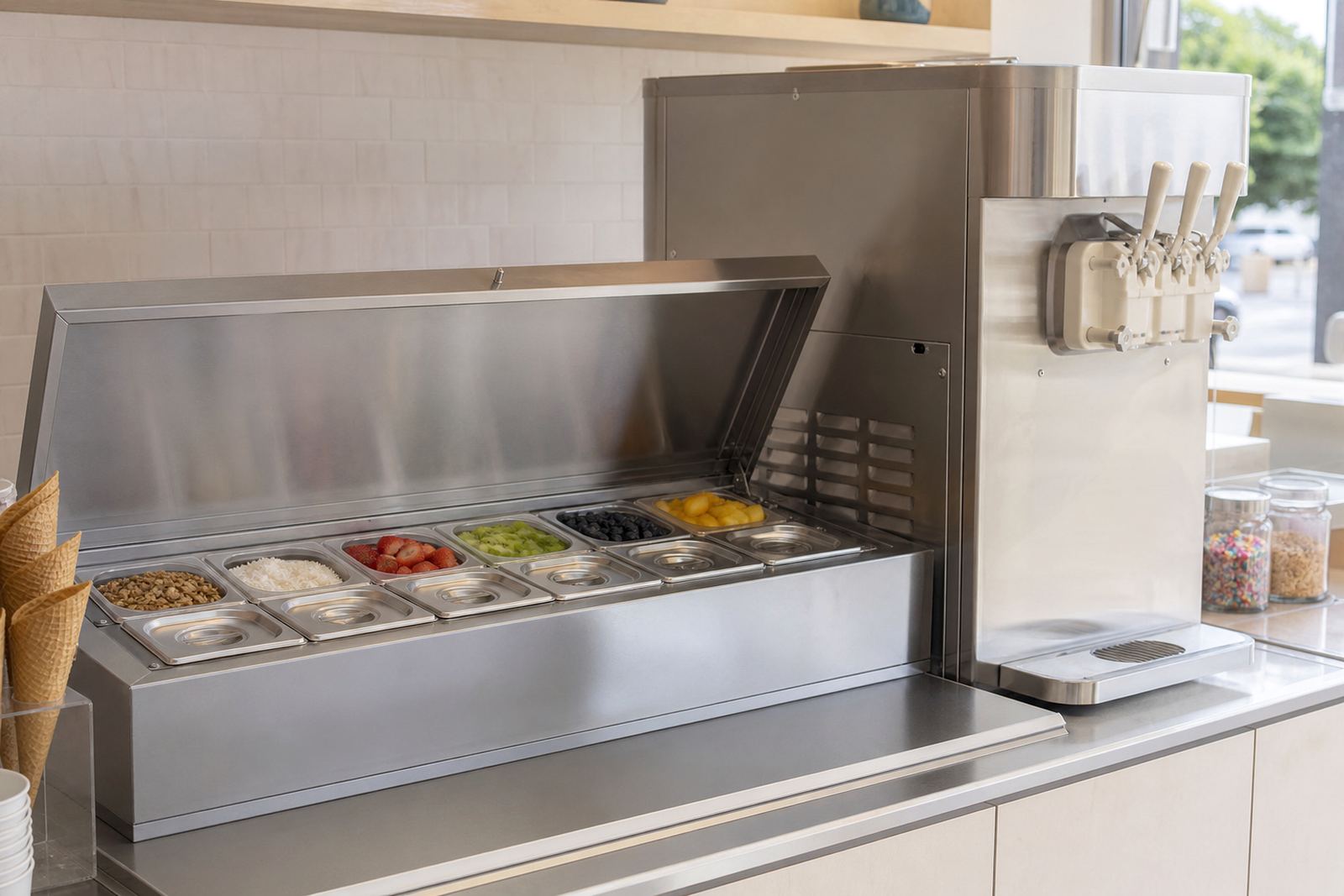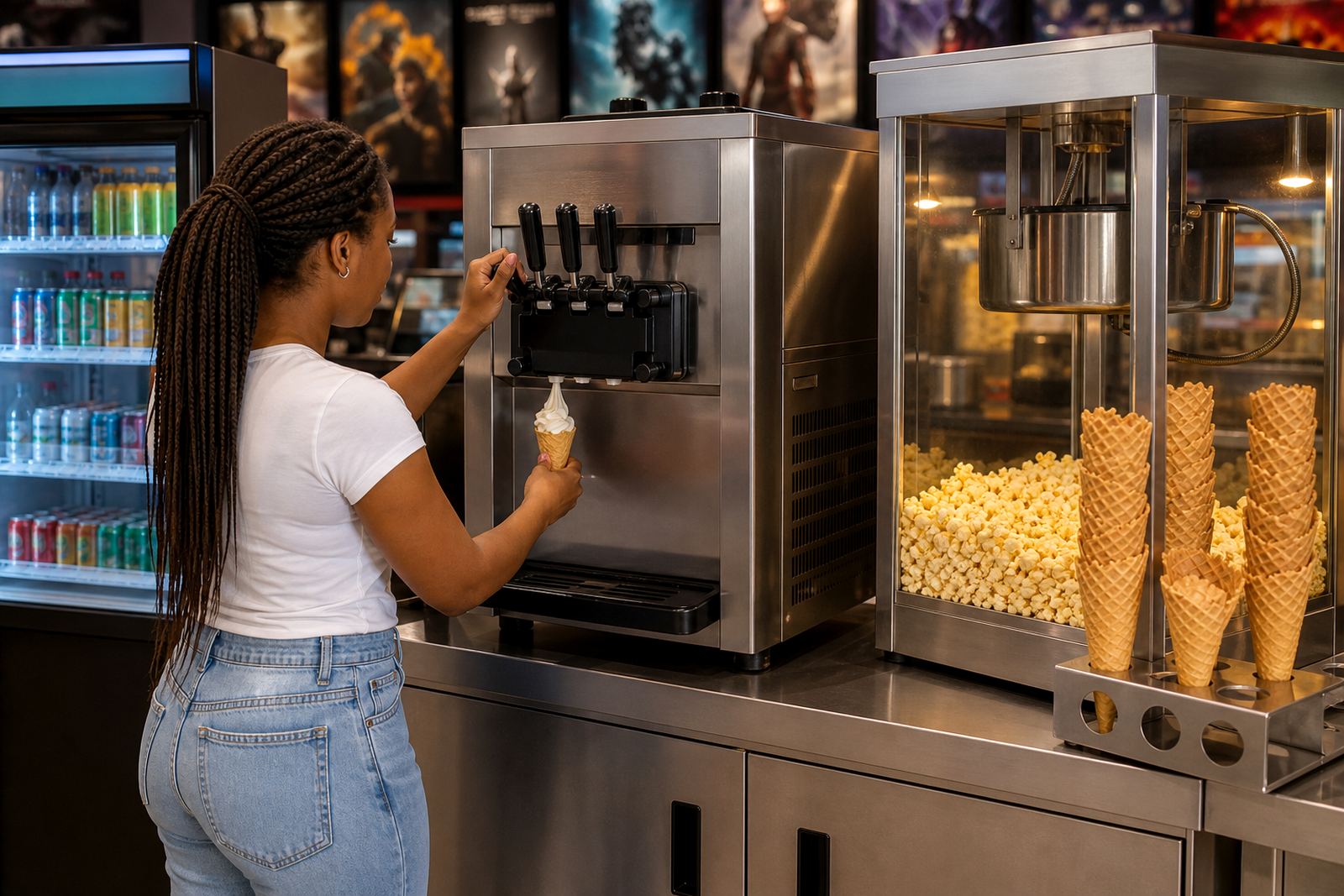
A neat frozen dessert point for fast-moving counters
The Cinema Snack Unit is made for spaces where every metre counts. It brings the machine, toppings and serving area into one compact setup, so staff can work quickly when the queue builds up after school runs, lunch breaks or weekend matinee traffic. In Durban and other coastal towns, it also helps keep product covered and easy to serve in warm, humid weather.
This unit suits operators who want a simple add-on to an existing snack counter rather than a large dessert island. You can use it for soft-serve, frozen yoghurt or a mixed dessert offer, depending on the machine and mix you choose. It is a good fit for sites that need impulse sales, tidy presentation and a service point that can be cleaned down fast between rushes.
- Compact footprint for counters, foyers and kiosk fronts
- Designed for quick service and visible product display
- Works well in busy snack trading areas
Sizes, layout options and serving setup
The Cinema Snack Unit is usually configured as a counter-mounted or stand-alone compact station, depending on the space you have available. The exact layout can be adjusted for a single machine, two smaller machines or a machine with a side work surface for cones, spoons and toppings. If your site is inside a mall or cinema complex, the footprint must still allow clear access for staff and keep the service face neat for customers.
Typical layouts range from about 1200 mm to 1800 mm wide, with depth from 700 mm to 900 mm, depending on whether you need storage below the counter. Height is usually kept around 900 mm to 1050 mm for comfortable serving. A good layout should also leave room for cup holders, cone dispensers and a small sanitising area. The aim is to keep the flow simple, so one staff member can serve without turning away from the queue.
- Single-machine or twin-machine layout options
- Counter depth can be matched to your site plan
- Storage space can be added for cones, mix and cleaning stock
Where it suits best across South Africa
This unit works well in places where customers want a treat while they wait or after they have bought snacks. It is often used in cinemas, family entertainment centres, forecourt snack shops, school canteens, tourist stops and restaurant dessert counters. In Johannesburg and Pretoria, operators often use it to add a fast dessert line in high-footfall areas. In Cape Town and Gqeberha, the setup is useful where customer traffic changes with the season and you need a simple menu item that still sells.
For Durban, Pietermaritzburg and other KwaZulu-Natal sites, the unit is especially useful where heat and humidity can affect product handling. A closed, easy-to-clean setup helps keep mixes and cones in good order, and a small footprint means it can sit close to the main till without crowding the front of house. If your site has limited back-of-house space, this kind of setup can reduce carrying distance and keep the service point efficient.
- Cinemas and foyers with impulse buying at peak times
- Kiosks, cafes and quick-service counters
- Sites that need a small but profitable dessert offer
Power, cooling and installation needs
Before ordering, check the power supply at your site and the space available for airflow around the machine. Most frozen dessert equipment needs a stable electrical supply and enough ventilation to handle daily trading, especially in warmer areas or where the unit sits near ovens, fryers or direct sunlight. During load shedding, you may need to plan for a suitable backup supply or a trading schedule that protects stock and prevents unnecessary downtime.
Installation should be done on a level surface with enough room for service access at the back and sides. If the unit includes refrigeration or an under-counter cabinet, it should not be placed where dust, grease or steam builds up. A site check before delivery helps avoid delays, and it also lets the team confirm cable routes, plug points and any municipal or landlord rules that may apply in malls or shared retail spaces.
- Stable electrical supply and correct plug point placement are important
- Allow space for ventilation and cleaning access
- Plan for load shedding and any site-specific trading rules
Care, cleaning and routine servicing
Frozen dessert equipment performs best when it is cleaned and checked every day. Mix lines, seals, nozzles and drip trays need regular attention, and staff should be shown exactly how to rinse down the machine at closing time. A deep clean on a planned schedule helps avoid product build-up and keeps flavour changes under control. If the unit is running in a coastal area, extra care is useful because salt air can wear on fittings and fasteners over time.
We recommend preventive maintenance, seal and parts checks, and season prep checks before busy periods such as school holidays or summer weekends. If the machine starts drawing slower or the texture changes, mix calibration and a service inspection may be needed. Quick phone support can help with common operating issues, but a trained technician should handle breakdown repairs, site relocations and any work involving internal components. That keeps the unit safe and helps extend its working life.
- Daily rinse down and closing checks
- Planned deep cleaning and preventive maintenance
- Parts, seals and calibration should be checked before peak season
What to confirm before placing an order
When choosing a Cinema Snack Unit, start with your available floor space and expected serving volume. A kiosk that sells during short rushes may only need one machine, while a busy restaurant or cinema foyer may need a larger counter arrangement. You should also confirm whether you want frozen yoghurt, soft-serve or both, and whether the unit must include storage, topping space or a display section for cones and cups.
It is also worth checking who will operate the unit each day. If you have a small team, a simpler setup with clear controls may suit better than a larger system with extra functions. Ask about startup commissioning, operator training and phone support so your staff know how to get the best from the machine from day one. That way you can open with confidence and keep the service point running properly through the week.
- Measure the site and confirm the available width, depth and height
- Decide on soft-serve, frozen yoghurt or a mixed dessert offer
- Check operator training, spare parts and service cover before ordering
Why this format works for snack counters
The Cinema Snack Unit is a practical way to add an impulse dessert to a snack counter without turning the whole space into a production area. It keeps the offer focused, the workflow simple and the cleaning routine manageable. For many cafes, kiosks and restaurants, that balance is what makes frozen dessert sales worthwhile.
If you need a unit that fits a smaller footprint but still looks organised and trades well, this format is a solid option. It is straightforward to install, simple to maintain and suited to South African trading conditions where power supply, heat and foot traffic all have to be considered from the start.
Key facts
| Product type | Compact frozen dessert snack unit |
|---|---|
| Typical width | 1200 mm to 1800 mm depending on layout |
| Typical depth | 700 mm to 900 mm depending on storage needs |
| Typical height | 900 mm to 1050 mm serving height |
| Power | Stable electrical supply required, backup planning advised during load shedding |
| Best use | Cinemas, kiosks, cafes, restaurants and entertainment venues |