

Home / Machines / Waffle Cone Warmer

Machines

Waffle Cone Warmer

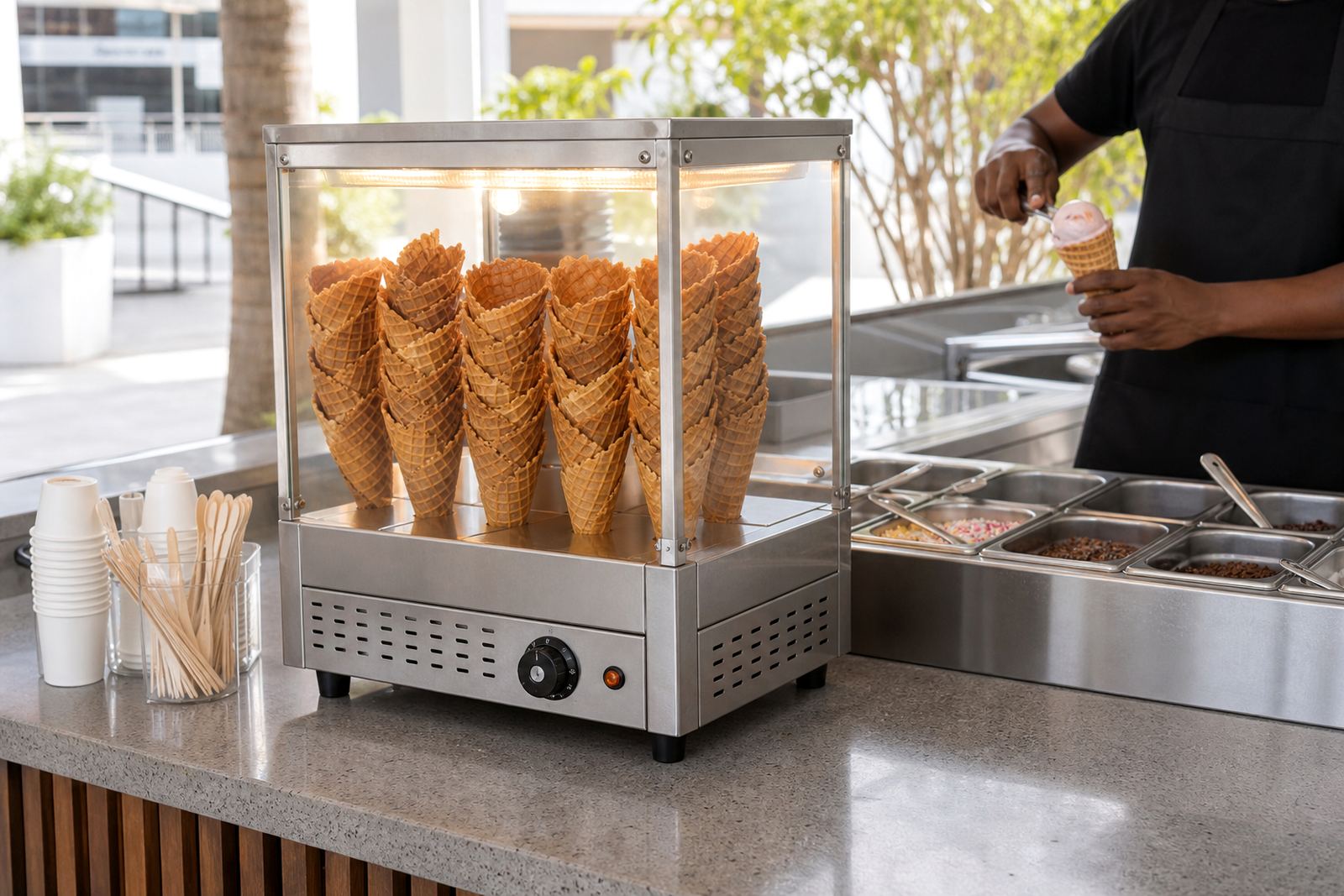
A waffle cone warmer keeps cones ready to serve during peak trade, so staff are not fumbling with cold stock when the queue builds. It suits busy dessert counters, kiosks and cafes that want cleaner service and a more consistent cone texture.

Waffle Cone Warmer

Why a waffle cone warmer earns its place on the counter

A waffle cone warmer is a small counter appliance used to hold waffle cones at a service-friendly temperature so they stay crisp on the outside and easy to handle. In a busy dessert spot, that means fewer broken cones, quicker handover and less waste during lunch rushes, school holiday periods and weekend trade.

For Durban operators, humidity can soften packed cones quicker than expected, especially when stock is kept near the service area. A proper warmer helps keep cones in a more stable condition through the day. It is not a cooking unit, and it does not replace dry storage, but it does give staff a practical way to keep the next cone ready without stopping the line.

This type of appliance suits businesses that sell soft-serve, frozen yoghurt and plated desserts where the cone is part of the final presentation. It also helps with portions, because staff are less likely to grab extra cones just to find one that is intact.

Sizes and options for different counters

Waffle cone warmers are generally compact, with a footprint suited to front-of-house counters and service shelves. Most units are supplied as single-bay or multi-bay warmers, depending on how many cones you want ready at once. Smaller counters in Umhlanga or Pietermaritzburg often do well with a compact unit, while higher-volume stores in Johannesburg or Cape Town may prefer a larger holding capacity.

When choosing the right size, think about daily cone turnover, available counter space and whether the warmer will sit beside a soft-serve machine, topping station or till point. A unit that is too small will need frequent refilling, while one that is too large can crowd the prep area.

  • Single-bay units for low to moderate cone volume
  • Multi-bay units for busier kiosks and dessert bars
  • Countertop format for front service areas
  • Enclosed warming chamber to help protect cones from dust and handling

Some operators also ask for a model that can sit under a pass shelf or beside a display unit. That is useful where the service flow is tight and staff need a clear reach path to cones, toppings and cups.

Where it suits best in South African food service

This product works well in cafes, kiosks, ice cream counters, beachfront outlets, forecourt food points and restaurant dessert stations. It is especially useful where the menu includes waffle cones as a standard serving option and the team needs to keep speed up during busy periods.

In coastal towns such as Durban and Gqeberha, salt air and moisture call for careful placement. Keep the warmer away from open windows, dishwash areas and direct splash zones. In inland stores, dust control matters just as much, particularly where the unit is used near entrance points or open-plan service areas.

  • Cafes offering soft-serve or frozen yoghurt
  • Snack counters in shopping centres
  • Kiosks with limited prep space
  • Restaurants with a dessert menu and takeaway service

If your outlet serves cones only at certain times of day, the warmer can still help during peak periods or seasonal trade. It gives the team a neater service rhythm and helps keep product ready without overhandling.

Power needs and practical installation notes

Most waffle cone warmers are electric counter units and need a standard single-phase supply, though the exact plug and load must be checked against the model supplied. Installation is usually straightforward: place the unit on a flat stable surface, allow ventilation space, and make sure the cord does not cross a wet or high-traffic path. If the warmer is being added to an existing counter line, check that the socket position is reachable without using extension leads.

For sites with load-shedding, it helps to plan the warmer together with the rest of the dessert equipment. A cone warmer is a relatively small load, but it still needs stable power if you expect consistent holding temperatures. Where the outlet runs off a backup system, ask whether the inverter or generator capacity can carry the full service line, not just the freezer and lights.

We also recommend checking the counter height and the reach distance to the soft-serve machine. Staff should be able to lift cones in one movement, without crossing over customer service areas. That keeps the station neater and reduces spills.

Keeping cones crisp, clean and service-ready

Good care makes a big difference with cone warmers. Wipe the exterior daily, remove crumbs before they build up, and follow the cleaning routine for the holding chamber. Cones should be stored dry and sealed before they go into the warmer. If they arrive with excess moisture, the warmer can only do so much, and texture will suffer.

Operators should also keep an eye on the heating element, thermostat function and door seals where fitted. If the unit is running too hot, cones may become brittle. Too cool, and they may lose the ready-to-serve feel that the warmer is meant to provide. Small checks each day help avoid avoidable spoilage.

  • Clean crumbs and sugar dust out before closing
  • Store cones in a dry sealed container before loading
  • Check the temperature setting at start-up and mid-shift
  • Keep the appliance away from steam and direct wash water
  • Book servicing if the unit heats unevenly or switches off unexpectedly

What to check before you place an order

Before ordering, confirm how many cones you want to hold at one time, where the warmer will sit and which power point is available. It also helps to know whether your menu uses standard waffle cones, larger dessert cones or mixed cone sizes. If your team packs cones into a display tray, measure that tray so the warmer can match the workflow properly.

Also check your daily trade pattern. A school-side kiosk in Pretoria may need different holding capacity from a beachfront counter in Cape Town or a lunch spot in Springfield Park. If you expect long peak windows, choose a model that gives staff a little extra capacity rather than forcing constant refills.

For best results, include the following details with your enquiry: counter space, cone type, expected serving volume, available power point and whether the unit will share space with other heat-producing equipment. That gives the right fit first time, and keeps the order process straightforward.

Key facts

Product typeCountertop waffle cone warmer
CapacitySingle or multi-bay options, depending on model
PowerElectric, single-phase supply
PlacementIndoor counter use
Typical useHolding waffle cones for service
Best suited toCafes, kiosks, dessert bars and restaurant counters

What our Soft-Serve Machine customers say

Verified Google reviews

Questions we get asked

Does a waffle cone warmer cook the cones?

No. It is used to hold prepared waffle cones at a service-ready temperature, not to bake or toast them.

Can it work in a busy coastal outlet?

Yes, but it should be placed away from open windows, steam and wash areas. Coastal humidity means storage and placement matter.

What information should I send when asking for one?

Send your counter size, cone type, expected serving volume and available power point so the right unit can be matched to your setup.

Planning something? Send the team a message.

Contact form